
![Maharishi Ayurveda Europe B.V. [DE]](http://maharishiayurveda.de/cdn/shop/files/mape_logo_85x_2x_4fa3ad6c-821a-4738-8803-0b9e4fbd888e.webp?v=1776845850&width=150)

![Maharishi Ayurveda Europe B.V. [DE]](http://maharishiayurveda.de/cdn/shop/files/mape_logo_85x_2x_4fa3ad6c-821a-4738-8803-0b9e4fbd888e.webp?v=1776845850&width=600)


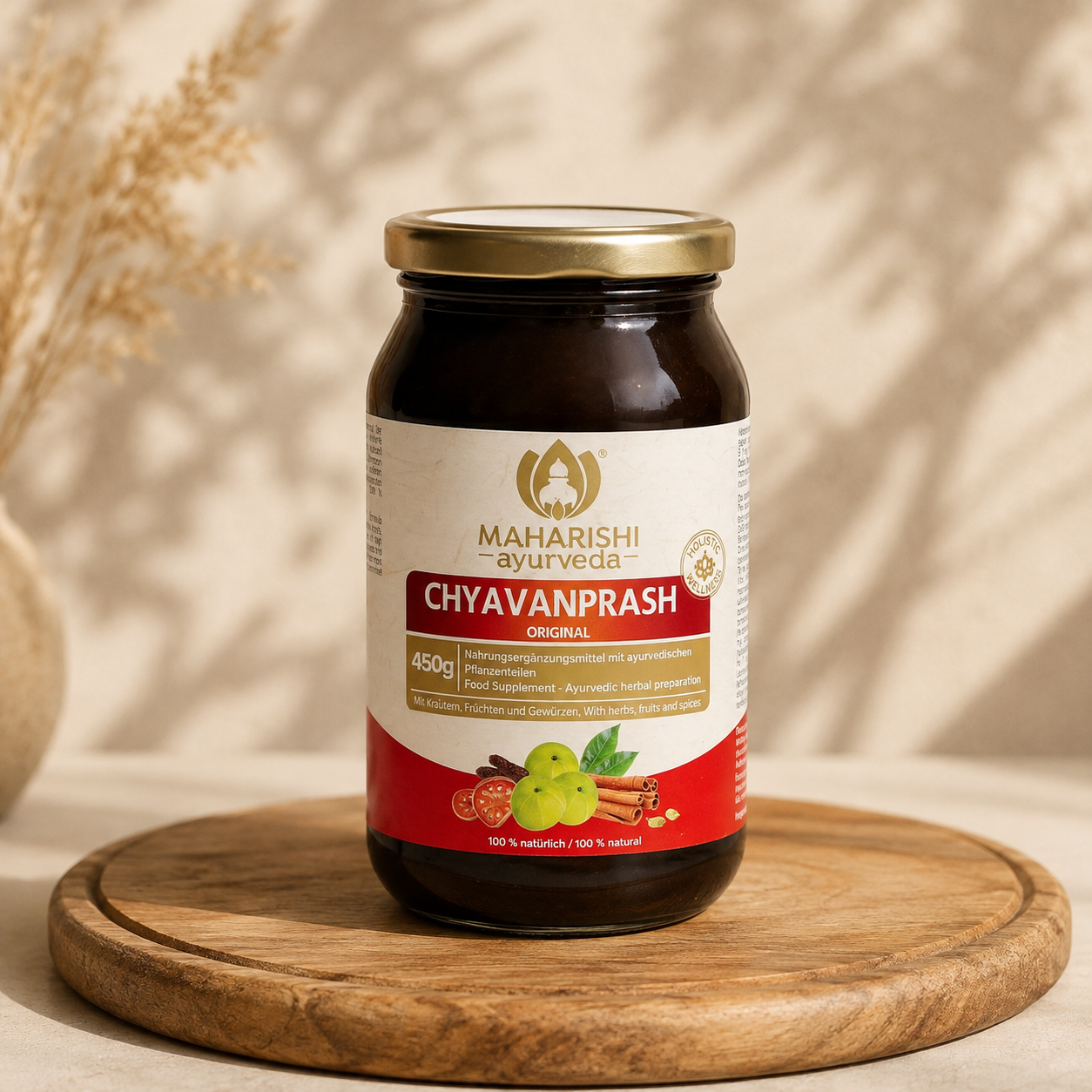
Original Chyavanprash 450 g
Nahrungsergänzungsmittel mit ayurvedischen Pflanzenteilen
The Chyavanprash dietary supplement is based exclusively on fully ripe amla fruits (Amalaki, Emblica officinalis), along with high-quality, natural herbs, ghee, honey, and other valuable ingredients, all carefully harvested in the best and most authentic Himalayan regions and other parts of India. In classical Ayurvedic texts, Amalaki is praised as one of the best and most important rasayanas, with a rare combination of beneficial properties. In authentic Ayurvedic scriptures, Amalaki is even referred to as a "divine medicinal plant."
The Amla fruit contains a high amount of vitamin C.
In Ayurveda, Chyavanprash is considered a rasayana that stimulates Agni* and is known as "Parmaukto Rasayana," which directs Vayu* in a natural direction. (*see note ).
Maharishi Ayurveda Original Chyavanprash is prepared according to the ancient Charak Samhita recipe and contains the precious bamboo manna called Vanshlochan.
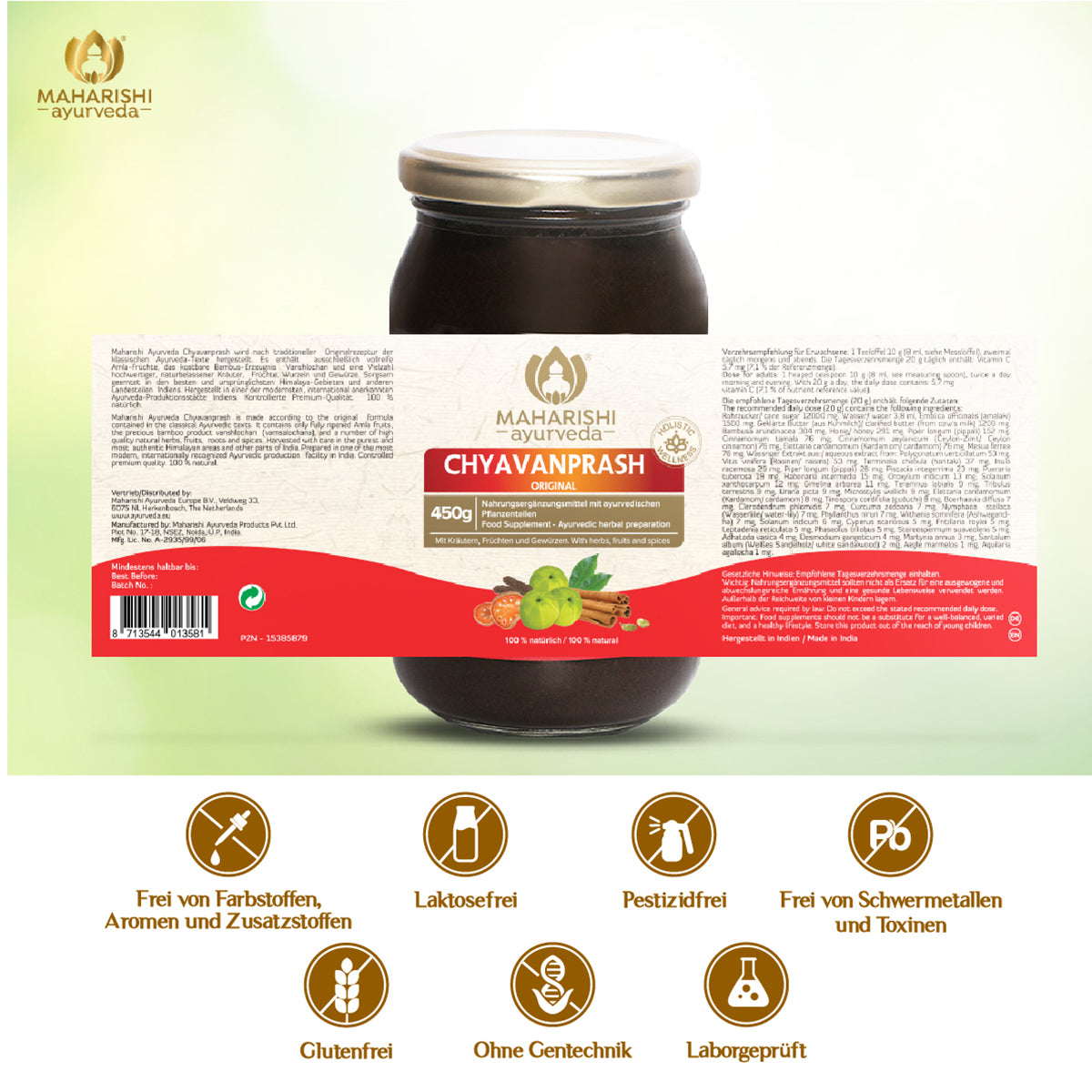
- Laboratory tested
- Free from heavy metals and toxins
- Free from pesticides, gluten, lactose
- Free from dyes, flavors and additives
- Without genetic engineering
Chyavanprash
- Vitamin C contributes to the normal function of the immune system and to the protection of cells from oxidative stress.
- Made with pure and original Vanshlochan (original Vanshlochan is a plant-based silica concentrate extracted from the internodes of special bamboo trees, making Chyavanprash even more effective).
- Vitamin C: 36.5% RDA (Recommended Dietary Allowance/NRV: Reference Intake for daily intake according to the Food and Drug Administration).
Bundle

Pack of 1
Pack of 2
Pack of 3
Delivery, Shipping and Returns


CONTENTS
450 g
EAN
8713544013581
ITEM NUMBER
010009


Total
Product Highlights


Unlock your personal Ayurvedic blueprint!
Deine Reise zu mehr Wohlbefinden beginnt mit etwas Einfachem und zugleich sehr Kraftvollem: dich selbst besser kennenzulernen. Unser Dosha-Test hilft dir, deine individuelle energetische Prägung zu erkennen, Ungleichgewichte wahrzunehmen und die Ansammlung von Ama zu verstehen – Stoffwechselrückstände, die Stimmung, Verdauung und dein gesamtes Wohlbefinden beeinflussen können.
Mach den Test und erhalte ganz persönliche Einblicke, leicht umsetzbare Empfehlungen zu Ernährung und Lebensstil sowie kleine Impulse, die sich mühelos in deinen Alltag integrieren lassen.
Denn Ayurveda ist nicht nur eine Methode – es ist ein Lebensstil im Einklang mit deiner wahren Natur.

Unlock your personal Ayurvedic blueprint!
Deine Reise zu mehr Wohlbefinden beginnt mit etwas Einfachem und zugleich sehr Kraftvollem: dich selbst besser kennenzulernen. Unser Dosha-Test hilft dir, deine individuelle energetische Prägung zu erkennen, Ungleichgewichte wahrzunehmen und die Ansammlung von Ama zu verstehen – Stoffwechselrückstände, die Stimmung, Verdauung und dein gesamtes Wohlbefinden beeinflussen können.
Mach den Test und erhalte ganz persönliche Einblicke, leicht umsetzbare Empfehlungen zu Ernährung und Lebensstil sowie kleine Impulse, die sich mühelos in deinen Alltag integrieren lassen.
Denn Ayurveda ist nicht nur eine Methode – es ist ein Lebensstil im Einklang mit deiner wahren Natur.

Construct Your Personal Path to Wellness
Our Ayurvedic Experts bring centuries of profound wisdom to your modern life. In a personalised 1-on-1 session from the comfort of your space, uncover insights often overlooked by modern health systems. Begin your journey to holistic wellbeing rooted in your unique energies, aligned to your system and designed to restore clarity, vitality, and balance.

Construct Your Personal Path to Wellness
Our Ayurvedic Experts bring centuries of profound wisdom to your modern life. In a personalised 1-on-1 session from the comfort of your space, uncover insights often overlooked by modern health systems. Begin your journey to holistic wellbeing rooted in your unique energies, aligned to your system and designed to restore clarity, vitality, and balance.

Some principles and insights of Ayurveda are based on concepts and perspectives that differ from those of conventional Western science. We therefore invite you to read the important information we have compiled for you.
Detailed ingredient lists and directions for use for each product can be found on the relevant product page. Alternatively, you can call us free of charge, and we will also be happy to provide you with the relevant best before date. 0800 2297472.