
![Maharishi Ayurveda Europe B.V. [DE]](http://maharishiayurveda.de/cdn/shop/files/mape_logo_85x_2x_4fa3ad6c-821a-4738-8803-0b9e4fbd888e.webp?v=1776845850&width=150)

![Maharishi Ayurveda Europe B.V. [DE]](http://maharishiayurveda.de/cdn/shop/files/mape_logo_85x_2x_4fa3ad6c-821a-4738-8803-0b9e4fbd888e.webp?v=1776845850&width=600)

Neem in Ayurveda: A Traditional Plant for Daily Routines
 2026 September 01
Neem is one of the best-known plants in the Ayurvedic tradition. Known traditionally as Nimba and botanically as Azadirachta indica, Neem has appeared in traditional practices and herbal preparations for generations.
Today, Neem is commonly available as powder, tablets and capsules, making it easier to include in a modern routine. However, Ayurveda does not look at Neem as an isolated “solution.” Herbs are traditionally considered according to their qualities, the person using them, the season, the preparation and the wider lifestyle.
In this guide, you will learn what Neem is, why it is valued in Ayurveda, which forms are available and what to consider before adding it to your daily routine.
What Is Neem and Why Is It So Well Known in Ayurveda?
Neem is a tree traditionally associated with the Indian subcontinent and other parts of tropical Asia. Its botanical name is Azadirachta indica, and in Ayurveda it is commonly known as Nimba.
Different parts of the Neem plant have been used in traditional contexts, including the leaves, bark, seeds and oil. However, these different forms are not the same and should not be treated as interchangeable.
Neem is well known in Ayurveda because it has a long history of traditional use. It appears in classical Ayurvedic references and has been included in different traditional preparations and routines.
Why is Neem important in Ayurvedic tradition?
Neem is important in Ayurveda because it represents one of the many plants used within a broader system of diet, herbs, daily routine and seasonal living.
Ayurveda traditionally evaluates herbs by their qualities, preparation and suitability for the individual. This means Neem is not recommended in the same way for everyone.
A herb may be traditional, but that does not automatically make it suitable for every person, every season or every duration of use.
What Are the Traditional Ayurvedic Benefits of Neem?
Neem has been valued in Ayurveda for generations because of its traditional role in herbal preparations and daily practices.
However, it is important to separate traditional Ayurvedic knowledge from modern medical claims. Traditional use gives cultural and historical context, but it should not automatically be interpreted as proof of a medical effect.
Neem should therefore be described carefully as a plant with a traditional place in Ayurveda, rather than as a treatment for a health condition.
How is Neem viewed in traditional Ayurvedic practices?
In Ayurveda, Neem is traditionally associated with a bitter taste and strong qualities. Because of this, it is usually approached with care and is not treated as a casual everyday herb for everyone.
Neem may appear in traditional formulations, powders or external-use preparations depending on the context. Internal use should always follow the instructions of the specific product or guidance from a qualified practitioner.
Neem Herbal Soap
View Product Information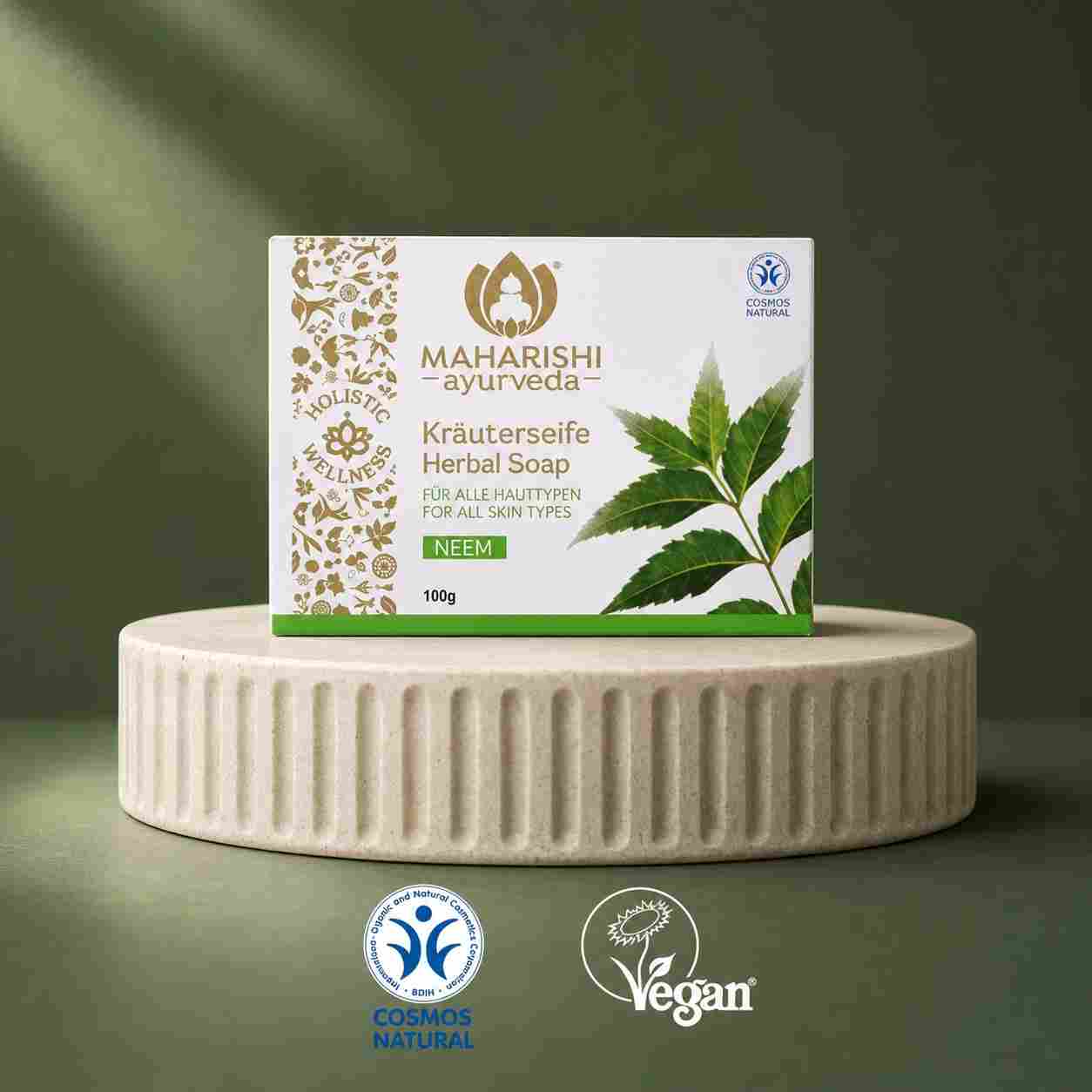
Why should Neem not be treated as a one-herb solution?
Ayurveda rarely treats a single herb as the whole answer. Food, sleep, digestion, routine, movement, mental state and seasonal habits are also important.
Neem may be one part of an Ayurvedic approach, but it does not replace a balanced lifestyle, professional advice or appropriate healthcare.
What Role Does Neem Play in an Ayurvedic Lifestyle?
Neem can be viewed as an optional part of an Ayurvedic lifestyle, not something everyone needs to consume.
In Ayurveda, herbs are most useful when they fit the individual and the wider routine. Adding several herbs without understanding why they are being used can make a routine unnecessarily complicated.
Why are plants important in Ayurveda?
Plants play an important role in Ayurveda because herbs, spices, foods and oils are all used in different ways within traditional routines.
Some herbs are used in food. Some are prepared as teas. Some appear in tablets, powders, oils or external preparations. Each form has a different purpose, method of use and level of suitability.
Neem should therefore be considered by its specific form, quality, instructions and individual fit.
How does Neem connect with daily habits?
Neem may be included in a routine only when it is appropriate for the person. A simple Ayurvedic lifestyle may also include:
-
Regular meals
-
Adequate sleep
-
Mindful eating
-
Seasonal food choices
-
Suitable daily movement
-
Gentle body-care routines
-
Herbs or supplements only when needed
A consistent lifestyle usually matters more than adding many herbs at once.
Was ist Neem Bio?
Neem Bio ist ein biologisch zertifiziertes Neem-Produkt in Tablettenform.
Nach den bereitgestellten Informationen hat Neem Bio dieselbe grundlegende Tablettenform wie Neem Natural, wobei Neem und Tapioka aus zertifiziert biologischem Anbau stammen. Es enthält ebenfalls 60 Tabletten / 30 g.
Die Wahl zwischen Neem Natural und Neem Bio hängt daher vor allem davon ab, ob dir eine zertifiziert biologische Herkunft wichtig ist.
Neem Bio – Dietary Supplement
View Product Information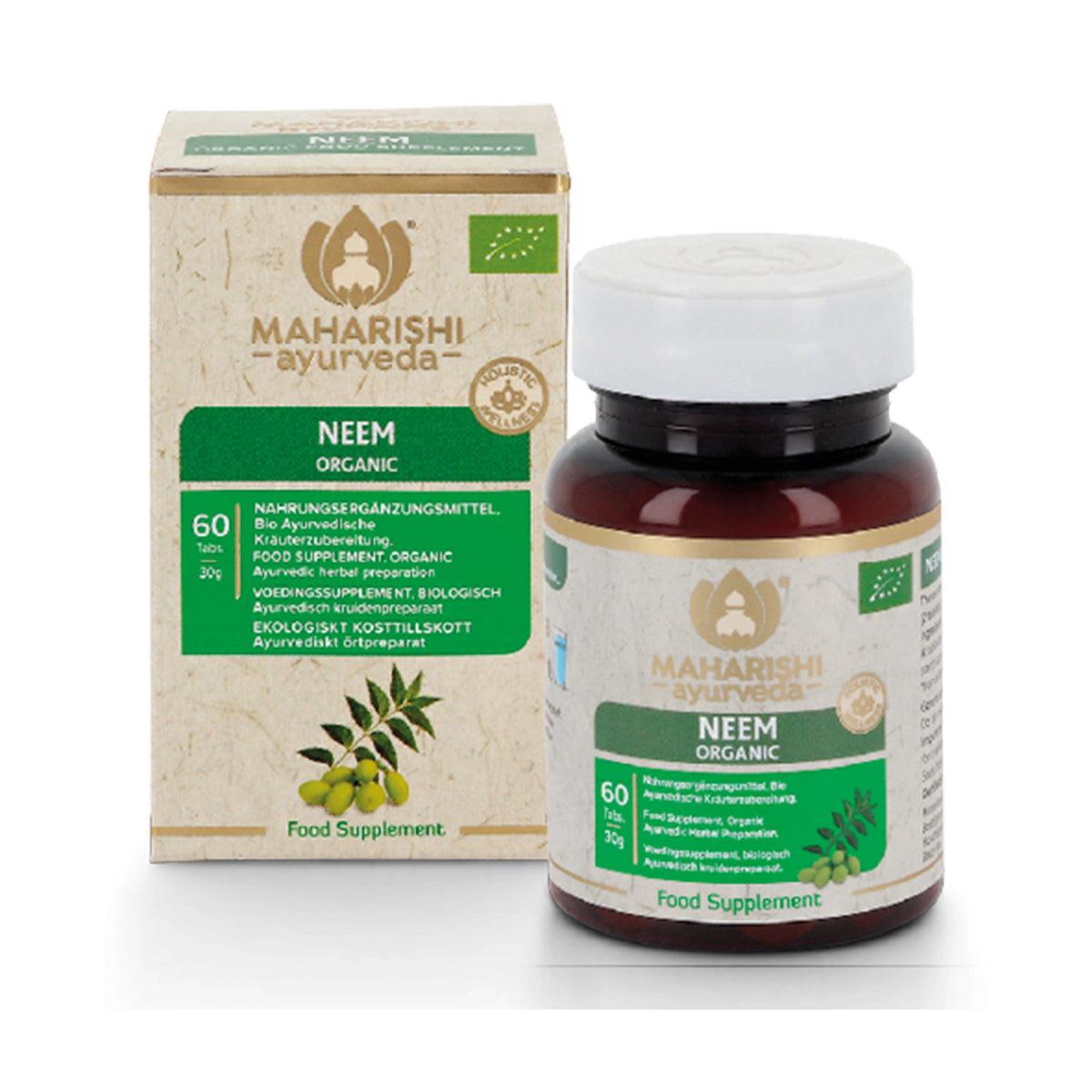
Was ist Neem Natural?
Neem Natural ist eine traditionelle ayurvedische Kräuterzubereitung in Tablettenform.
Nach den bereitgestellten Produktinformationen wird Maharishi Ayurveda Neem Natural aus Neem-Blattpulver und Tapioka hergestellt. Die derzeit empfohlene tägliche Portion von zwei Tabletten liefert 950 mg Neem-Blatt.
Das Produkt enthält 60 Tabletten / 30 g.
Neem Natural kann für Menschen geeignet sein, die eine abgemessene Tablettenform bevorzugen und den starken bitteren Geschmack von Neem-Pulver vermeiden möchten.
Neem Natural – Dietary Supplement
View Product Information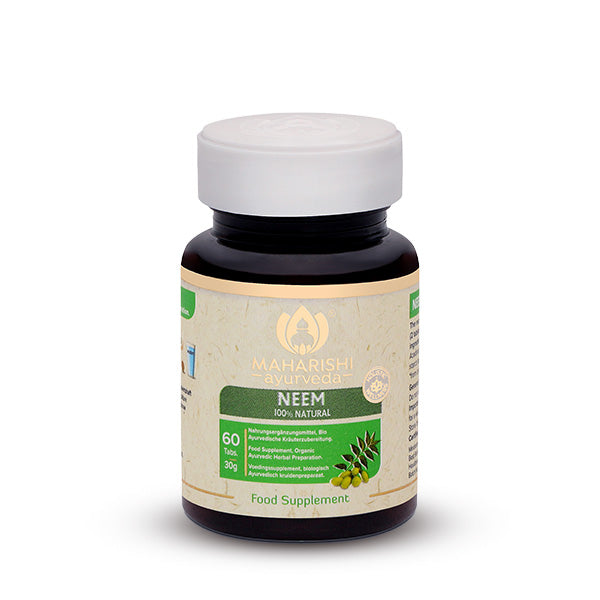
What Forms of Neem Are Available?
Neem is available in different product formats. The most common modern forms include Neem powder, Neem tablets and Neem capsules.
There is no universally “best” format. The right choice depends on product quality, instructions, taste preference, convenience and personal suitability.
What Is Neem Powder?
Neem powder is a traditional and simple form of Neem. It is usually made from dried Neem leaves or other specified plant parts, depending on the product.
Neem powder may appeal to people who prefer a more traditional format. However, Neem has a naturally bitter taste, which may not suit everyone.
When choosing Neem powder, check:
-
Which plant part is used
-
Whether the product is intended for internal or external use
-
The suggested quantity
-
Quality and testing information
-
Storage instructions
-
Any warnings on the label
Do not assume that all Neem powders are the same.
What Are Neem Tablets?
Neem tablets offer a more convenient and measured format. They may be easier to include in a routine because the taste is usually less noticeable than powder.
Tablets can also be practical for travel or work, where preparing powders may not be convenient.
When choosing Neem tablets, check:
-
The full ingredient list
-
The amount per tablet
-
Recommended daily use
-
Whether the product contains additional herbs
-
Suitability warnings
-
Quality and testing standards
Follow the specific product instructions rather than creating your own dosage.
What Are Neem Capsules?
Neem capsules are another practical format, especially for people who prefer not to taste the herb directly.
Capsules may contain Neem leaf powder, extracts or other forms depending on the product. This is why it is important to read the label carefully.
When choosing Neem capsules, check:
-
Whether the capsule is vegetarian or vegan, if relevant
-
Which form of Neem is used
-
The suggested daily amount
-
Whether the product is combined with other ingredients
-
Any cautions for pregnancy, breastfeeding, medication or existing conditions
Capsules are convenient, but convenience does not remove the need for careful use.
What Is the Difference Between Neem Powder, Tablets and Capsules?
The main difference between Neem powder, tablets and capsules is the format and how easily they fit into daily life.
|
Format |
Best For |
Practical Consideration |
|
Neem powder |
People who prefer a traditional format |
Bitter taste may not suit everyone |
|
Neem tablets |
People who want a measured format |
Easier for daily use and travel |
|
Neem capsules |
People who prefer not to taste Neem |
Check capsule type and ingredients |
The choice should be based on product quality, label instructions and what realistically fits into your routine.
Which Neem format suits your lifestyle?
Neem powder may suit someone who is comfortable with traditional preparations and taste. Neem tablets may suit someone who wants a simple measured format. Neem capsules may suit someone who wants convenience and minimal taste.
No form should be used carelessly or indefinitely without considering suitability, product guidance and professional advice where needed.
How Can You Include Neem in Your Ayurvedic Daily Routine?
If Neem is appropriate for you, consistency and suitability matter more than creating a complicated routine.
Neem may be taken according to the instructions of the specific product or professional advice. It can be paired with simple Ayurvedic habits such as regular meals, adequate sleep and mindful daily routines.
Should Neem be taken in the morning or evening?
There is no universal timing that applies to every Neem product. The correct timing depends on the product instructions and the advice of a qualified practitioner.
Do not assume that Neem should be taken at a particular time just because another Ayurvedic herb is used that way. Always follow the specific label.
How can Neem fit into a simple routine?
Neem can be paired with a clear habit, such as:
-
A regular morning routine
-
A supplement routine already recommended by a practitioner
-
A mindful evening routine, if the product instructions allow
-
A seasonal routine, when appropriate
-
A wider Ayurvedic lifestyle plan
The aim is not to add pressure. Ayurveda should gradually become part of daily life, not another stressful checklist.
Who Should Be Careful With Neem?
Neem is not suitable for everyone. Pregnant or breastfeeding women, children, people taking medication and anyone with an existing health condition should seek professional advice before internal use.
Extra caution is also important because different Neem preparations are not the same. Neem leaf products, Neem extracts and Neem oil can differ significantly.
Neem oil in particular should not be treated as equivalent to Neem leaf powder, tablets or capsules.
Can Neem Have Side Effects?
Yes. Herbal products can also cause unwanted effects, especially when the wrong preparation, poor-quality product or excessive amount is used.
Possible concerns depend on the form, quantity, duration and individual person. This is why product instructions and professional guidance matter.
Stop use and seek advice if you experience an unexpected reaction.
How Long Can You Take Neem?
There is no universal duration for Neem use. The appropriate duration depends on the preparation, amount, reason for use and individual situation.
Neem should not be taken indefinitely simply because it is traditional. Long-term use should be discussed with a qualified practitioner, especially if you take medication or have a diagnosed condition.
Conclusion: How Should You Think About Neem in Ayurveda?
Neem is a well-known Ayurvedic plant with a long history of traditional use. Known as Nimba in Ayurveda and botanically as Azadirachta indica, it is available today in forms such as powder, tablets and capsules.
Its value comes from its place in Ayurvedic tradition, but that does not mean it should be used casually by everyone. Ayurveda considers the person, the season, the preparation, the quality of the product and the wider lifestyle.
Neem can be viewed as an optional part of an Ayurvedic routine when suitable. It should not replace balanced food, proper sleep, daily habits, professional advice or medical care where needed.


