
![Maharishi Ayurveda Europe B.V. [DE]](http://maharishiayurveda.de/cdn/shop/files/mape_logo_85x_2x_4fa3ad6c-821a-4738-8803-0b9e4fbd888e.webp?v=1776845850&width=150)

![Maharishi Ayurveda Europe B.V. [DE]](http://maharishiayurveda.de/cdn/shop/files/mape_logo_85x_2x_4fa3ad6c-821a-4738-8803-0b9e4fbd888e.webp?v=1776845850&width=600)

Caffeine-free wellness drinks for your daily routine
 2026 July 29
For many people, the day begins almost automatically: switch on the kettle, make coffee and hope that the first cup provides enough energy for the morning.
Coffee can certainly be part of a balanced lifestyle, but it does not have to be the only hot drink in your routine. Some people want to reduce their caffeine intake, avoid caffeine later in the day or simply add more variety to their drinks.
This is where decaffeinated drinks can make everyday life more interesting. Herbal teas, fruit infusions, rooibos and gently spiced drinks offer a wide range of flavours without relying on coffee or black tea.
A hot drink can also be more than something quickly consumed between two tasks. Preparing it, appreciating its aroma and taking a few uninterrupted minutes to drink can create a small moment of calm in everyday life.
This article explores caffeine-free alternatives for the morning, afternoon and evening, including herbal tea, Ayurvedic tea and practical options for home, work and travel.
Why are caffeine-free drinks becoming increasingly popular?
Caffeine-free drinks are becoming increasingly popular because many people want more choice in their daily routine. Caffeine naturally occurs in coffee, black tea, green tea and some other drinks. Many people enjoy these drinks without any issues, while others may want to reduce caffeine because of personal preference, sensitivity or the time of day.
Choosing a caffeine-free drink does not mean that coffee or traditional tea have to be eliminated completely. It can simply mean creating more variety.
For example, someone might drink coffee in the morning, choose herbal tea in the afternoon and prepare a mildly spiced drink in the evening. This makes caffeine-free drinking a flexible routine rather than a strict rule.
Which caffeine-free drinks are good options?
Caffeine-free drinks include rooibos, herbal teas, fruit infusions, chicory root drinks, roasted grain drinks, warm milk drinks and Ayurvedic herbal or spice blends.
Common caffeine-free drinks include:
- Rooibos
- ginger tea
- fennel tea
- peppermint tea
- chamomile tea
- lemon balm tea
- rose or hibiscus infusions
- fruit infusions
- chicory root drinks
- roasted grain drinks
- warm milk or plant-based drinks with spices
- caffeine-free Ayurvedic herbal and spice blends
Not every drink is suitable for everyone. Taste, ingredients, allergies, medicines, pregnancy and individual health requirements should always be taken into account.
How do you choose drinks beyond coffee and black tea?
Coffee, black tea and green tea have their own flavour profiles, partly created by the plants used and the processing methods. A caffeine-free alternative does not have to imitate them perfectly.
Instead of simply looking for a drink that tastes exactly like coffee, it can be more enjoyable to discover something different.
Rooibos naturally has a soft, slightly sweet character. Chicory root drinks offer a roasted flavour. Ginger brings warmth and intensity, while fennel has a naturally mild sweetness. Spiced drinks can bring cinnamon, cardamom or vanilla into a morning or afternoon routine.
This turns reducing caffeine into an opportunity to discover new flavours rather than simply giving something up.
How can you make more mindful drink choices?
It is easy to drink coffee or tea out of habit without asking whether you really want it at that moment.
A more mindful approach can begin by pausing briefly and asking yourself:
- Am I thirsty, or am I simply following a habit?
- Do I want something refreshing, warming or mild in flavour?
- Is it early morning, afternoon or just before bedtime?
- Do I want a simple herbal infusion or a richer drink?
- Does the product contain caffeine, sugar or ingredients I should avoid?
This does not have to become a complicated daily decision. The aim is simply to bring more awareness to an ordinary habit.
Which caffeine-free drinks suit different times of day?
A strong ginger or spiced drink can suit a cold morning, while a lighter mint or fruit infusion may feel more suitable in the afternoon.
In the evening, many people prefer mild flavours such as rooibos, chamomile or lemon balm. These drinks can be part of an evening routine, but should not be presented as a treatment for insomnia, anxiety or another medical concern.
The best choice is often the one that fits your schedule, tastes pleasant and is suitable for your individual needs.
What are the best caffeine-free alternatives for your morning routine?
A morning drink often does more than quench your thirst. It marks the transition between waking up and starting the day.
Replacing coffee with a caffeine-free option, or alternating between the two, can create a different kind of morning routine: one based on flavour, warmth and consistency rather than expecting a particular result from a drink.
Simple morning options include:
- warm water
- ginger tea
- Rooibos
- fennel tea
- warm apple or pear infusion
- a mild cinnamon-cardamom drink
- Warme Milch oder eine geeignete pflanzliche Alternative mit Gewürzen
- a caffeine-free Ayurvedic tea blend
A hot drink should not replace breakfast when breakfast is needed. It can simply complement a balanced morning routine.
Is herbal tea a good alternative to coffee?
Herbal tea is one of the simplest caffeine-free alternatives that can be incorporated in the morning or throughout the day.
Ginger tea has a strong, warming flavour and may appeal to people who want a more pronounced aroma. Fennel tea is milder and naturally aromatic. Peppermint offers a fresh flavour, while rooibos has more body and can feel more like traditional tea.
Technically, many products commonly called herbal teas are actually herbal infusions because they are not made from the tea plant Camellia sinensis . However, the term “herbal tea” is widely used and understood in everyday language.
Always check the label carefully. A blend described as herbal tea may still contain green tea, black tea, mate or guarana, all of which can contribute caffeine.
Which spiced drinks can you try in the morning?
A simple spiced drink can add a bit of variety to your morning without requiring a complicated recipe.
You can warm water, milk or a suitable plant-based drink with a small amount of the following ingredients:
- Zimt
- Kardamom
- fresh ginger
- Fenchel
- Vanille
- Kurkuma
Spices should be used in quantities that suit personal taste and tolerance. A drink does not automatically become more suitable simply because it contains many spices.
People with reflux, allergies, gallbladder problems or questions relating to medicines may need individual advice about particular herbs and spices.
How can you create a calm morning drink routine?
A calm morning routine with a drink can be very simple:
- Choose your drink before automatically reaching for coffee.
- Prepare it without checking messages at the same time.
- Notice the aroma as it brews.
- Sit down for a few minutes if possible.
- Drink slowly rather than carrying the cup from one task to the next.
The value of this routine lies in the pause it creates. It should not be presented as a guaranteed way to improve productivity, mood or health.
Why are herbal teas so popular for everyday enjoyment?
herbal teas are popular because they are easy to prepare, widely available and come in many flavours.
They can be enjoyed hot in winter or naturally cooled in warmer months. Some are made from a single herb, while others combine leaves, flowers, roots, seeds, fruits and spices.
Herbal tea requires very little: a cup, hot water and a tea bag or tea strainer. It can be prepared at home, in the office or on the go. A pack of herbal tea is easy to store and offers a simple alternative when someone wants a hot drink without coffee.
Another reason for their popularity is variety. Herbal teas can taste fresh, floral, earthy, spicy, sweet or slightly bitter.
Which herbal tea flavours can you discover?
Different ingredients create very different drinking experiences.
Fresh and aromatic options can include peppermint, spearmint or lemongrass. Mild and naturally sweet flavours can include fennel, anise, rooibos or liquorice. Floral blends can contain chamomile, rose, lavender or hibiscus. Spiced varieties can contain ginger, cinnamon, cardamom, cloves or black pepper. Fruit infusions can combine apple, rosehip, berries, orange peel or hibiscus.
The word “natural” does not mean that every herb is automatically suitable for everyone. Liquorice tea, for example, may be unsuitable for some people in large or frequent quantities, particularly with certain conditions or medicines.
Should you choose organic herbal tea?
Organic herbal tea is produced according to the relevant requirements for organic farming and certification. People may choose organic products for agricultural, environmental or certified-origin reasons.
However, the word “organic” does not automatically mean that a tea is more suitable for everyone or has a stronger wellness effect.
Quality should also be assessed based on the following:
- full ingredients list
- botanical ingredients
- added flavours
- allergen information
- preparation instructions
- best-before date
- condition of the packaging
- details of the responsible manufacturer
Choose a product because its ingredients and flavour suit you, not simply because the word “organic” appears on the packaging.
How can herbal tea become part of your daily routine?
Herbal tea can be linked to moments that already exist in your daily routine.
You could prepare it:
- after waking up
- with breakfast
- during a short morning break
- after lunch
- during an afternoon screen break
- after returning home
- during an evening reading routine
Keeping two or three varieties available can prevent the routine from becoming monotonous. A fresh mint or fruit infusion may suit one day, while ginger tea or a spice blend may be more appealing on another.
What makes Ayurvedic tea different?
An Ayurvedic tea usually combines herbs and spices inspired by traditional Ayurvedic principles. These teas can be chosen according to taste, season, time of day or traditional dosha concepts.
Ayurvedic teas often focus on the qualities of the ingredients and how they are combined. A blend may contain warming spices, cooling aromatic herbs or ingredients traditionally associated with Vata, Pitta or Kapha. These dosha descriptions are part of the traditional Ayurvedic framework and should not be understood as medical diagnoses.
Not every product described as “Ayurvedic” has the same ingredients or intended use. The full label remains more important than the name on the front of the pack.
Discover Ayurvedic teas for your daily balance
Read our blog “Ayurvedic teas: Enjoyment, balance and inspiration in every cup” and find out how herbs, spices and dosha-inspired tea blends can enrich your daily routine.
Which herbs and spices are used in Ayurvedic teas?
Common ingredients in Ayurvedic teas can include:
- ginger
- cinnamon
- cardamom
- fennel
- coriander
- cumin
- turmeric
- liquorice
- tulsi
- rose
- mint
- black pepper
- cloves
Some Ayurvedic tea blends also contain black or green tea and are therefore not caffeine-free. Always check the ingredients if you want to avoid caffeine.
A blend containing several traditional herbs should not automatically be assumed to be suitable for everyone. People who are pregnant or breastfeeding, take medicines or have a diagnosed condition should seek individual advice where appropriate.
Find out more about herbs and spices in Ayurvedic tea
Read our blog “How Ayurvedic herbs and spices are used in tea” and discover how ingredients such as fennel, ginger, cardamom, mint and rose can enrich your Ayurvedic tea moments.
Which Ayurvedic teas suit morning and evening routines?
In the morning, someone may enjoy a more aromatic blend with ginger, cinnamon, cardamom or fennel.
In the evening, a milder combination with rooibos, rose, chamomile or gently aromatic spices may feel more suitable.
The choice should be based on the actual ingredients list and personal tolerance. An Ayurvedic evening tea should not be marketed as a treatment for sleep problems unless an authorised claim explicitly applies to the product.
How can you create mindful tea moments throughout the day?
A tea ritual does not require special equipment or a lengthy ceremony.
It can include:
- choosing a cup you enjoy using
- smelling the herbs before brewing
- giving the tea enough time to brew
- sitting away from the computer
- taking several calm sips
- noticing the temperature and flavour
These simple actions can turn a drink break into a mindful moment in a busy day.
What are warm wellness drinks for different times of day?
The term “wellness drink” is often used for drinks associated with self-care or daily routines. It should not be understood to mean that a drink prevents or treats illness.
A hot drink can simply provide flavour, hydration and a pleasant break.
Morning drink ideas
Morning drinks can be warming, aromatic and easy to prepare.
Options include:
- ginger tea
- rooibos with cinnamon
- fennel-cardamom infusion
- warm apple with cinnamon
- chicory root drink
- Warm milk or a plant-based drink with spices
- caffeine-free Ayurvedic tea
People switching from several coffees a day may prefer to do so gradually rather than expecting a herbal drink to immediately recreate the same experience.
Afternoon drink options
The afternoon is a common time when many people automatically reach for another coffee. Caffeine-free alternatives can include:
- peppermint tea
- Rooibos
- hibiscus and fruit infusion
- fennel tea
- ginger-lemon infusion
- warm water with fresh herbs
- mildly spiced tea
- decaffeinated coffee
Decaffeinated coffee and decaffeinated tea are not always completely caffeine-free. Small amounts may remain. People who need to avoid caffeine strictly should check the product information and, where appropriate, choose naturally caffeine-free alternatives.
Evening drinks
An evening drink can be part of the transition from work to personal time.
Milder options include:
- chamomile tea
- lemon balm tea
- Rooibos
- fennel tea
- rose infusion
- Warm milk or a suitable plant-based drink
- a gentle caffeine-free spice blend
Do not make the drink unnecessarily large just before bedtime if this causes discomfort or leads to repeated trips to the toilet during the night.
Also check whether an evening blend contains liquorice, stimulating spices, added sugar or hidden sources of caffeine.
How do you find out what suits your lifestyle?
The best drink is not necessarily the most expensive, exotic or fashionable option.
Choose drinks that:
- taste pleasant
- are easy to prepare
- suit the time of day
- fit your budget
- are compatible with your health requirements
- do not contain ingredients you need to avoid
- can realistically become part of your routine
Variety is helpful, but you do not need ten different teas at home. A small selection for morning, afternoon and evening may be enough.
How do you build a mindful drink routine?
A new routine often fails when it becomes too complicated. Buying a cupboard full of teas is easier than remembering to drink them.
A more sustainable approach starts with a small habit.
Choose a specific moment. For example:
- Replace an afternoon coffee with herbal tea.
- Prepare rooibos when you return home from work.
- Drink a hot caffeine-free drink while planning your day.
- Make an evening infusion before reading.
Repeat this habit for several days before adding another. The aim is not to create a perfect routine. It is to build a routine that can last through normal, busy weeks.
How can drink breaks support self-care?
Self-care is sometimes presented as something expensive or elaborate. In everyday life, it can be much simpler.
Preparing a drink can be a reminder to:
- take a screen break
- sit down
- drink enough fluids
- step away from work
- talk to a colleague or family member
- spend a few quiet minutes alone
A drink is not self-care because of a particular ingredient. It becomes part of self-care through the intention and space created around it.
Turn your tea break into a little self-care ritual
Read our blog “Tea break as self-care: an Ayurvedic ritual for greater balance” and discover how a mindful cup of Ayurvedic tea can bring more calm, warmth and mindfulness into your everyday life.
Which caffeine-free drinks are practical for work?
At the workplace, drinks requiring minimal preparation are particularly practical.
Useful options include:
- herbal tea bags
- rooibos tea bags
- an insulated cup or thermos flask
- individually packaged spice blends
- a jar of loose-leaf tea with a simple tea strainer
- caffeine-free instant chicory drinks
Keep the ingredients list or original packaging, especially if allergies or other dietary requirements are relevant.
A tea break can also be an opportunity to stand up, refill your water and briefly step away from your desk.
Which caffeine-free drinks are practical on the go?
For travel, individual tea bags are usually the simplest option. They take up little space and can be prepared anywhere hot water is available.
A reusable thermos flask can keep herbal tea warm for a train journey, commute or outdoor activity. If you prepare tea in advance, clean the flask thoroughly and do not keep milk-based drinks unrefrigerated for long periods.
Practical travel ideas include:
- rooibos tea bags
- ginger and spice sachets
- fennel tea
- fruit infusions
- caffeine-free Ayurvedic tea blends
When travelling internationally, herbs should remain in their original labelled packaging. Also check local customs regulations before carrying loose plant material.
Raja’s Cup Powder
View product information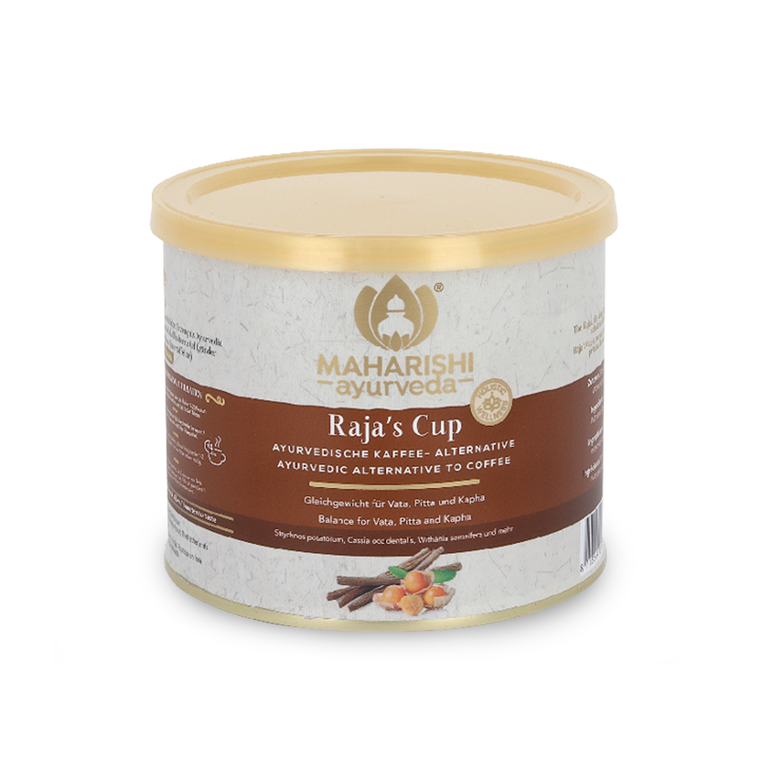
How can you create relaxing drink moments at home?
At home, the routine can be more creative.
Loose herbal blends, fresh ginger, cinnamon sticks, cardamom pods or fresh mint can be used when there is time. A teapot or favourite cup can make the routine feel more mindful without requiring a major investment.
A hot drink can accompany:
- reading
- Journaling
- a conversation
- gentle stretching
- Musik
- an evening without screens
It is the surroundings and the attention given to the moment, not the drink alone, that create the relaxing experience.
What is a simple caffeine-free drink routine?
A practical caffeine-free routine can be as simple as:
- ginger tea in the morning
- peppermint or fruit infusion at work
- rooibos in the afternoon
- a mild herbal tea in the evening
There is no need to follow the same pattern every day. Weather, appetite, schedule and personal preferences can guide the choice.
Conclusion: How do caffeine-free drinks fit into everyday life?
Caffeine-free drinks offer much more variety than many people expect.
Herbal teas, rooibos, fruit infusions, chicory drinks and Ayurvedic spice blends can offer interesting alternatives to coffee, black tea and green tea. They can be adapted to mornings, afternoons, evenings, busy working days and travel.
The most valuable routine is not the one with the most trendy ingredients. It is the one that is enjoyable, safe and realistic enough to repeat.
Start with a small change: replace an automatic coffee, discover a new herbal flavour or take five quiet minutes with a hot drink.
Over time, this simple cup can become less about what you are avoiding and more about creating a mindful moment in your day.
Caffeine-free and herbal products can still contain ingredients that are unsuitable for certain people. Always read the label, follow the preparation instructions and seek professional advice if you are pregnant or breastfeeding, take medicines, are choosing products for children or have a diagnosed condition.
If you want to drink less coffee or are looking for a hot alternative in the afternoon, Raja’s Cup Powder can fit into your daily drink routine as a caffeine-free herbal and spice blend.


