
![Maharishi Ayurveda Europe B.V. [DE]](http://maharishiayurveda.de/cdn/shop/files/mape_logo_85x_2x_4fa3ad6c-821a-4738-8803-0b9e4fbd888e.webp?v=1776845850&width=150)

![Maharishi Ayurveda Europe B.V. [DE]](http://maharishiayurveda.de/cdn/shop/files/mape_logo_85x_2x_4fa3ad6c-821a-4738-8803-0b9e4fbd888e.webp?v=1776845850&width=600)

Triphala in Your Daily Routine: When and How to Use It
 2026 September 25
Triphala is one of the best-known classical preparations in Ayurveda. It is a traditional combination of three fruits: Haritaki, Bibhitaki and Amalaki.
Texts such as the Charaka Samhita and Ashtanga Hridaya describe Triphala in different formulations and contexts. This is important because Ayurveda does not look at Triphala as a one-size-fits-all supplement. How it is used may vary according to the individual, the preparation, the timing and the purpose.
This guide explains how Triphala can fit into a daily Ayurvedic routine, including when it is traditionally used, how Triphala powder can be prepared, how powder compares with tablets, and what to check before adding it to your routine.
The information below reflects traditional Ayurvedic use and should not be understood as medical advice. Always follow the instructions on your specific product and seek professional guidance if you are pregnant, breastfeeding, taking medication or managing an ongoing health condition.
What Is Triphala and How Does It Fit Into an Ayurvedic Routine?
Triphala is a classical Ayurvedic combination made from three fruits:
-
Haritaki
-
Bibhitaki
-
Amalaki
The name Triphala means “three fruits.” In Ayurveda, it is traditionally used in different preparations and contexts, depending on the person and the purpose.
Triphala may be found in powders, tablets, capsules or classical formulations. Some people prefer powder because it offers a more traditional experience, including Triphala’s characteristic taste. Others prefer tablets or capsules because they are easier to use during work, travel or a busy routine.
Ayurveda does not treat Triphala as a generic everyday product for everyone. Factors such as constitution, digestion, current routine, age, product format and individual suitability should be considered.
Learn more about Triphala in Ayurveda
If you’d like to explore Triphala in more detail, read our comprehensive guide, „Triphala in Ayurveda: Benefits and Traditional Use“. You’ll learn which three fruits make up Triphala, how it is traditionally understood, and what to consider when it comes to use, quality, and suitability.
What Is the Best Time to Take Triphala in a Daily Routine?
There is no universal “best time” to take Triphala for everyone. In Ayurveda, timing depends on the intended use, the preparation, meal timing, individual needs and product guidance.
When Triphala is traditionally used
Triphala may be included in a morning or evening routine, depending on the context. Some traditional uses place it later in the day, while other routines may use it at a different time.
Instead of following a general rule such as “always take Triphala at night,” it is better to follow the instructions of your specific product or personalised Ayurvedic advice.
Triphala in a morning vs. evening routine
A morning routine may be easier for people who prefer to keep all supplements and herbal products together at the start of the day.
An evening routine may suit people who want to keep Triphala separate from meals or other daily products.
The most practical time is often the time you can follow consistently. Ayurveda values regularity, but regularity does not mean that everyone needs the same Triphala timing, dosage or duration.
How meal timing can be considered
Meal timing can matter in Ayurveda because digestion, preparation and the accompanying medium are all part of how an Ayurvedic product is used.
Ayurveda also considers anupana, which means the medium taken along with an Ayurvedic preparation. For example, classical texts may describe different accompanying substances in specific contexts.
For daily use, do not change the timing or medium randomly. Follow the product label or consult a qualified practitioner if you are unsure.
How Can You Prepare Triphala for Your Daily Routine?
Triphala preparation depends on the format you choose. Powder, tablets and capsules are used differently, so the product instructions should always be the main guide.
How to prepare Triphala powder
Triphala-Pulver k can be mixed with lukewarm water and taken according to the recommended quantity on the product.
A simple preparation may look like this:
-
Measure the recommended quantity of Triphala powder.
-
Add it to lukewarm water.
-
Stir well.
-
Take it close to the time of preparation.
-
Follow the product’s usage instructions.
Do not exceed the recommended amount unless advised by a qualified practitioner.
Triphala Plus Pulver Bio 250 g
View Product Information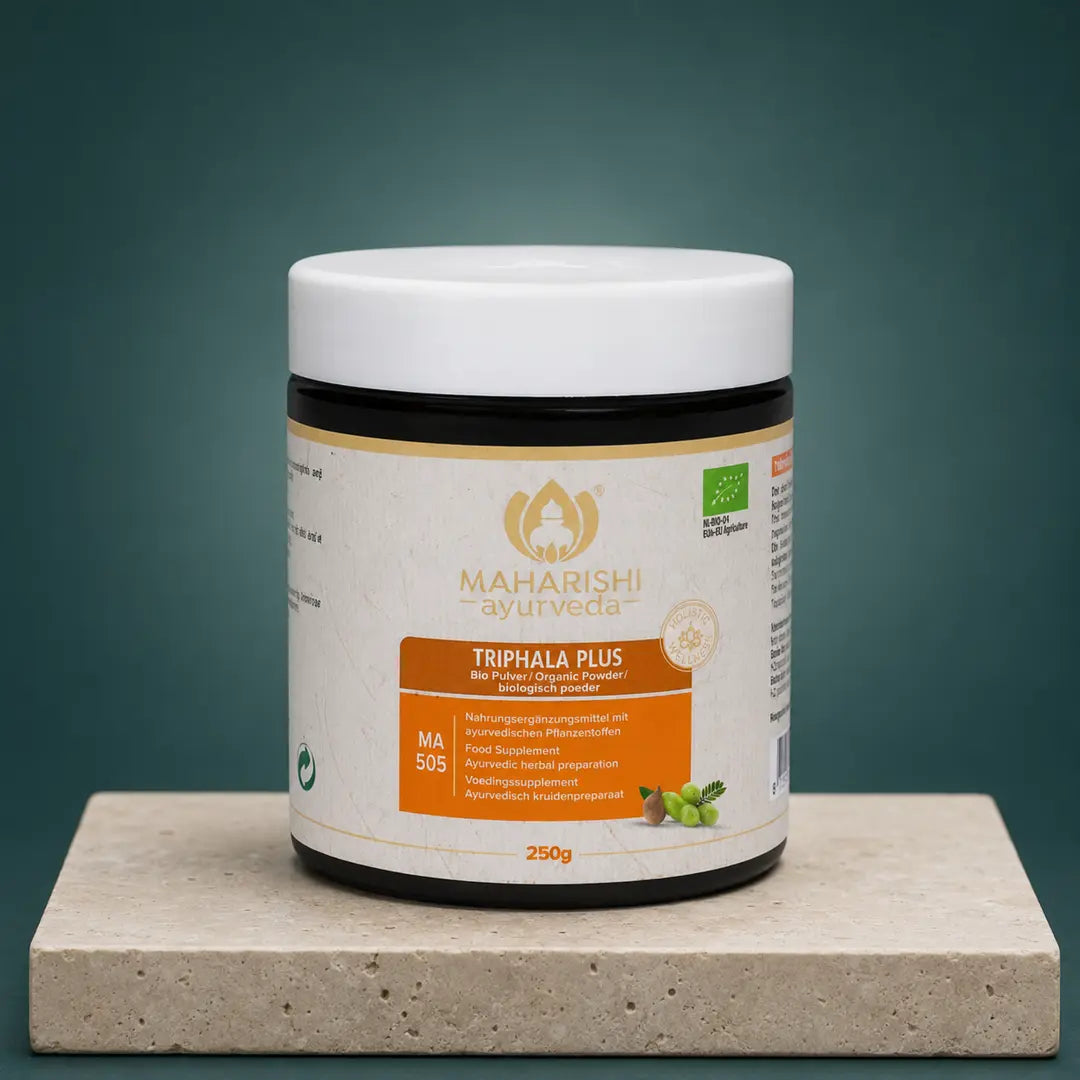
Using warm water
Lukewarm water is a simple and common way to prepare Triphala powder. It helps make the powder easier to mix and fits well into a simple Ayurvedic routine.
Avoid using boiling water unless the product instructions specifically recommend it.
Simple preparation steps
To keep your routine easy:
-
keep the powder in a clean, dry place
-
use a clean spoon
-
close the container tightly after use
-
prepare only what you need
-
use the mixture close to the time of preparation
Once Triphala powder is mixed with water, it is better not to store it for long periods.
Following the product instructions
Different Triphala products may have different recommended use, serving size and preparation guidance. Always read the label carefully.
Check:
-
recommended quantity
-
timing instructions
-
preparation method
-
storage guidance
-
whether the product contains only Triphala or added ingredients
-
warnings or precautions
Should You Choose Triphala Powder or Tablets for Your Routine?
Both Triphala powder and Triphala tablets can fit into a daily routine. The better choice depends on your lifestyle, preference and how easily you can maintain the routine.
Powder vs. tablets
Triphala powder offers a more traditional experience and includes Triphala’s characteristic taste. It may be preferred by people who like preparing herbs in a simple, traditional way.
Triphala-Tabletten or capsules are more convenient and easier to measure. They may be better suited for people who want a simple, travel-friendly format.
Triphala Plus Natural 250 g
View Product Information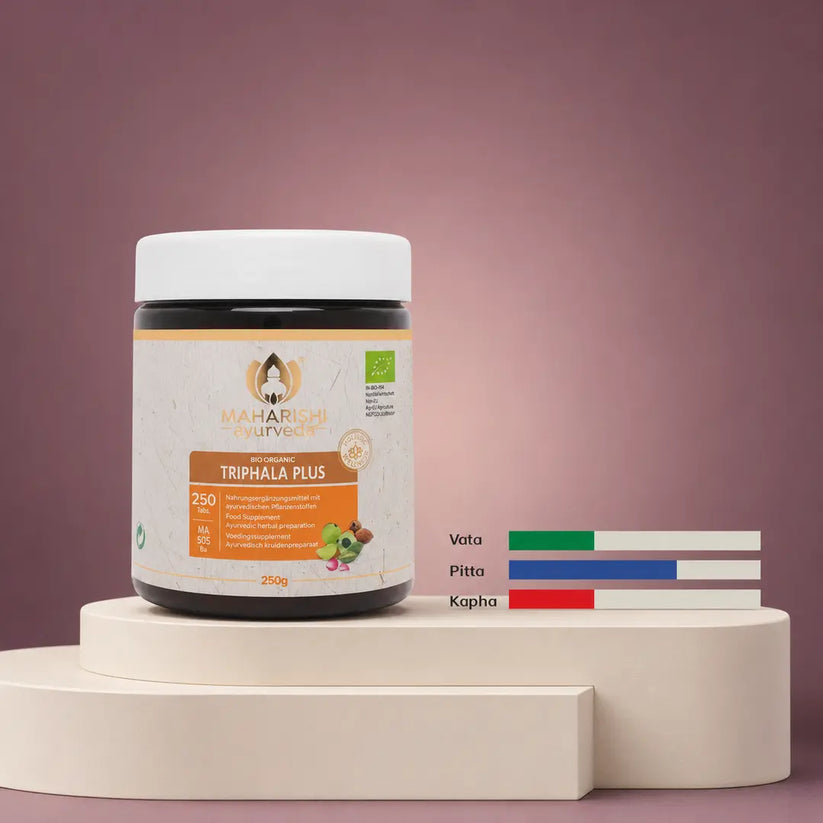
Convenience
Tablets and capsules are usually easier for busy schedules. They do not require mixing, measuring powder or preparing a drink.
Powder requires a little more effort but may feel more connected to a traditional Ayurvedic routine.
Home vs. travel
At home, Triphala powder can be easy to prepare if you have a regular routine and a clean storage space.
While travelling, tablets or capsules are usually more practical because they are easier to carry, measure and use away from home.
How Can You Build a Simple Triphala Routine That Fits Your Day?
A good Triphala routine should be simple, consistent and realistic. It should fit your actual day rather than feel like another complicated task.
Creating a consistent routine
Choose one practical time and stay with it instead of changing the routine every few days.
You may connect Triphala with an existing habit, such as:
-
your morning warm water routine
-
your evening wind-down routine
-
your supplement routine
-
your post-travel routine, if recommended
-
a fixed time suggested on the product label
Consistency helps make the routine easier to remember.
Morning or evening routine
Both morning and evening use may be possible depending on the product and individual guidance.
A morning routine may feel easier if you prefer starting the day with all your wellness habits. An evening routine may feel easier if you want a quieter time and fewer interruptions.
Follow your product instructions rather than assuming one time is always best.
Preparing in advance
Dry Triphala powder can be kept ready in its original container, stored away from moisture.
However, once Triphala powder is mixed with water, it is better prepared close to the time of use. Avoid preparing large amounts in advance.
Keeping the routine simple
A simple Triphala routine may include:
-
one chosen format
-
one consistent time
-
clear product instructions
-
proper storage
-
attention to your body’s response
-
professional guidance when needed
Avoid adding many herbs or supplements at the same time. Ayurveda values suitability, not complexity.
What Should You Check Before Adding Triphala to Your Routine?
Before using Triphala regularly, check whether the product and routine are suitable for you.
Recommended use
Read the recommended use carefully. This includes serving size, timing, preparation and any warnings.
Do not assume that every Triphala product has the same instructions.
Ingredients
Check whether the product contains only Triphala or includes additional ingredients.
Traditional Triphala contains Haritaki, Bibhitaki and Amalaki. If other herbs or substances are included, the product may have a different intended purpose.
Product-specific instructions
Product-specific instructions matter because Triphala powder, tablets, capsules and classical formulations may be used differently.
Check:
-
format
-
serving size
-
preparation method
-
timing
-
storage
-
expiry date
-
warnings
-
suitability notes
Choosing a format that fits your routine
The best format is the one that matches your lifestyle and can be used correctly.
Powder may suit people who enjoy traditional preparation. Tablets or capsules may suit people who prefer convenience, travel use or a taste-free format.
If you are pregnant, breastfeeding, taking medicines, buying for a child or managing an ongoing health condition, seek professional guidance before using Triphala.
Personalised Ayurveda guidance for your routine
If you’re unsure whether Triphala fits your current routine, constitution or circumstances, a personal Ayurveda consultation can help you understand how it may fit your individual needs.
Conclusion
Triphala can be part of a daily Ayurvedic routine, but Ayurveda does not treat it as a one-size-fits-all supplement. Timing, preparation, format and suitability all matter.
There is no single best time to take Triphala for everyone. Some people may include it in a morning routine, while others may prefer an evening routine. Triphala powder offers a more traditional experience, while tablets and capsules may be more convenient for work and travel.
The best approach is simple: choose a clearly labelled product, follow the recommended use, store it properly and keep your routine consistent. If you are unsure about timing, dosage, medium or long-term use, seek personalised Ayurvedic or medical guidance.


