


Ayurvedic Kitchen Essentials: 6 Must-Haves for Everyday Cooking
 2026 October 27
An Ayurvedic kitchen begins with simple ingredients, aromatic spices and thoughtful food preparation. Six useful Ayurvedic kitchen essentials are Vata Churna, Pitta Churna, Kapha Churna, Organic Ghee, Asafoetida (Hing) and Rock Salt. These ingredients can be used to season vegetables, prepare lentils, cook rice and add traditional Ayurvedic flavours to everyday meals.
Ever wondered why the same meal feels comforting to one person but heavy to another?
Traditional Ayurveda considers food through concepts such as Agni (digestive fire), Doshas and individual food suitability. Rather than following the same cooking approach for everyone, Ayurveda looks at the ingredients, preparation style, season and personal preferences.
Creating an Ayurvedic kitchen does not mean preparing complicated recipes or collecting dozens of unfamiliar ingredients. A few versatile spices and cooking staples can make everyday meal preparation more interesting and convenient.
From warm vegetable dishes to freshly cooked rice, dal and soups, these six kitchen essentials offer simple ways to bring Ayurvedic-inspired cooking into your daily routine.
What Are the Essential Ingredients for an Ayurvedic Kitchen?
The six useful ingredients for an Ayurvedic kitchen are Vata Churna, Pitta Churna, Kapha Churna, Organic Ghee, Asafoetida and Rock Salt. Each has a different culinary purpose, from adding aromatic seasoning to cooking and finishing warm meals.
Ayurvedic Churnas provide ready-made spice combinations, ghee offers a rich cooking medium, Hing adds a distinctive savoury flavour, and rock salt is used for everyday seasoning.
|
Kitchen essential |
What it is |
How you can use it |
|
Vata Churna |
Warm, aromatic Ayurvedic spice blend |
Season vegetables, rice, soups and lentils |
|
Pitta Churna |
Mild, fragrant Ayurvedic spice blend |
Add to cooked vegetables, dal and soups |
|
Kapha Churna |
Warming, spicy Ayurvedic spice blend |
Season lentils, vegetables and savoury meals |
|
Organic Ghee |
Clarified butterfat |
Cook spices, prepare vegetables and finish rice or dal |
|
Asafoetida (Hing) |
Strongly aromatic resin-based spice |
Add a pinch during tempering |
|
Rock Salt |
Mineral salt traditionally called Saindhava Lavana |
Season soups, grains and cooked vegetables |
These ingredients can be combined with fresh vegetables, grains, lentils and seasonal foods to create a practical Ayurvedic-inspired kitchen.
How Can You Use Ayurvedic Churnas in Everyday Cooking?
Churna is a Sanskrit word meaning powder. In Ayurveda, the term can describe powdered preparations made from different ingredients.
For everyday cooking, culinary Churnas are spice blends that combine several herbs and spices into one convenient seasoning.
Instead of measuring several separate spices every time you prepare a meal, you can use a suitable Churna to introduce a balanced combination of flavours.
Maharishi Ayurveda offers Vata, Pitta and Kapha Churna, each with a different flavour profile inspired by traditional Ayurvedic culinary principles.
1. How Can You Use Vata Churna in Your Cooking?
Maharishi Ayurveda Vata Churna is a warm, aromatic spice blend inspired by traditional Vata-oriented dietary principles.
It combines:
-
Cumin
-
Ginger
-
Turmeric
-
Fenugreek
-
Asafoetida (Hing)
-
Whole cane sugar
-
Rock salt
Together, these ingredients create a flavourful, gently spiced blend suitable for a variety of warm dishes.
Organic Vata Churna
View Product Details
Which Foods Go Well With Vata Churna?
Vata Churna pairs naturally with:
-
Warm vegetable soups
-
Cooked seasonal vegetables
-
Basmati rice
-
Lentil dishes
-
Khichdi
-
Simple grain preparations
How Do You Use Vata Churna?
You can sprinkle Vata Churna over freshly cooked vegetables, rice or lentils.
Another option is to warm a little ghee in a pan, briefly sauté the spice blend and combine it with your prepared dish.
For example, roasted pumpkin with ghee and Vata Churna makes a flavourful autumn side dish.
Start with a small amount and adjust the seasoning according to personal taste and the product instructions.
2. How Can You Use Pitta Churna in Your Cooking?
Maharishi Ayurveda Pitta Churna is a mild, fragrant spice blend inspired by traditional Pitta-oriented cooking.
It contains:
-
Coriander
-
Fennel
-
Cumin
-
Ginger
-
Turmeric
-
Cardamom
-
Ceylon cinnamon
-
Whole cane sugar
-
Rock salt
The combination of coriander, fennel and cardamom gives the blend a distinctively aromatic character.
Compared with stronger, pepper-based spice blends, Pitta Churna offers a milder seasoning option.
Organic Pitta Churna
View Product Details
Which Foods Go Well With Pitta Churna?
Pitta Churna can be used with:
-
Cooked summer vegetables
-
Vegetable soups
-
Lentil dishes
-
Rice preparations
-
Tomato-based dishes
-
Simple vegetable-and-grain meals
How Do You Use Pitta Churna?
Sprinkle a suitable quantity over cooked vegetables, soups or lentils.
You can also briefly sauté Pitta Churna in ghee or oil before mixing it into a dish.
For example, a simple vegetable soup can be finished with a little Pitta Churna to add aroma without relying on a long list of individual spices.
The blend can also be used in freshly prepared rice or dal.
3. How Can You Use Kapha Churna in Your Cooking?
Maharishi Ayurveda Kapha Churna is a more pronounced, warming spice blend inspired by traditional Kapha-oriented culinary principles.
It contains:
-
Ginger
-
Black pepper
-
Turmeric
-
Ceylon cinnamon
-
Coriander
-
Whole cane sugar
-
Rock salt
Ginger and black pepper give Kapha Churna a distinctly spicy character, while cinnamon and coriander contribute additional aromatic notes.
Organic Kapha Churna
View Product Details
Which Foods Go Well With Kapha Churna?
Kapha Churna pairs well with:
-
Hearty lentil preparations
-
Cooked vegetables
-
Vegetable soups
-
Savoury grain dishes
-
Warm seasonal meals
How Do You Use Kapha Churna?
Kapha Churna can be sprinkled over cooked dishes or added during food preparation.
For example, you can use it to season a freshly prepared lentil soup or cooked vegetables.
Because the blend has a stronger spice profile, begin with a modest quantity and adjust according to taste.
What Is the Difference Between Vata, Pitta and Kapha Churna?
Although all three are Ayurvedic culinary spice blends, they differ in their ingredients, flavour intensity and traditional Dosha-oriented inspiration.
|
Spice blend |
Main flavour characteristics |
Suitable everyday dishes |
|
Vata Churna |
Warm, aromatic and savoury |
Rice, warm vegetables, soups and lentils |
|
Pitta Churna |
Mild, fragrant and aromatic |
Summer vegetables, dal and lighter soups |
|
Kapha Churna |
Spicy, warming and pronounced |
Hearty lentils, vegetables and savoury preparations |
You do not need to use all three Churnas in every meal.
Instead, choose the blend that suits the dish, your preferred level of spice and your individual culinary routine.
What Is Ghee and How Can You Use It in an Ayurvedic Kitchen?
Ghee is clarified butterfat traditionally used in Indian and Ayurvedic cooking. It has a rich, buttery flavour and can be used to sauté spices, prepare vegetables, cook grains or finish warm dishes such as dal and khichdi.
Ghee is prepared by heating butter to remove most of its water and milk solids, leaving concentrated butterfat.
In classical Ayurveda, ghee is traditionally described as Snigdha, meaning unctuous or oily, and is associated with Pitta-pacifying qualities in traditional Ayurvedic texts.
These descriptions belong to the classical Ayurvedic system and are not established medical outcomes.
Organic Ghee (Clarified Butter)
View Product Details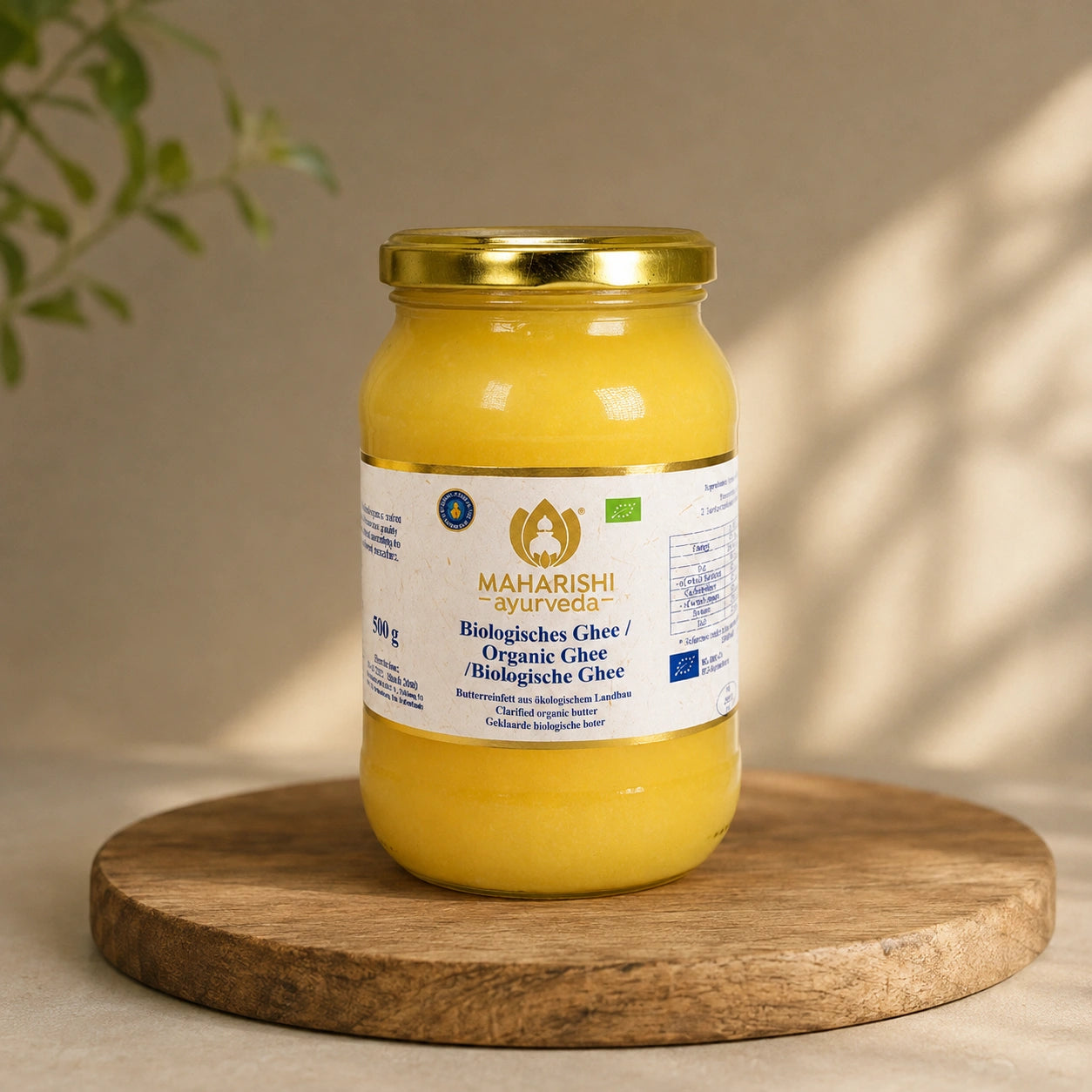
How Can You Cook With Organic Ghee?
Organic ghee is a versatile ingredient that can be used in several simple ways.
1. Sauté aromatic spices
Warm a little ghee in a pan and add cumin, coriander or other suitable spices before incorporating vegetables or lentils.
2. Finish freshly cooked rice
Add a small amount of ghee to warm basmati rice for additional richness and aroma.
3. Prepare cooked vegetables
Use ghee when sautéing seasonal vegetables with your preferred herbs and spices.
4. Add ghee to dal
A small amount of ghee can be used during tempering or added to freshly cooked lentils.
5. Finish khichdi
Stir a little ghee into warm khichdi before serving.
How Much Ghee Should You Use in Everyday Cooking?
The appropriate quantity depends on the recipe, serving size and individual dietary needs.
For simple preparations, approximately one teaspoon per serving can be a practical starting point, with adjustments according to taste and nutritional requirements.
Ghee is rich in saturated fat, so moderation is important. It should be included as part of a varied and balanced diet rather than added excessively to every meal.
Want to use Ghee more often in your everyday cooking?
Whether for breakfast, warm vegetable dishes, or adding flavor to rice and lentils, Ghee can be incorporated into your daily meals in many simple ways. You don't need unusual ingredients or complicated cooking techniques.
Explore our article 7 Easy Ghee Recipes for Everyday Cooking to discover how to prepare a variety of Ayurvedic-inspired dishes with just a few ingredients.
What Is Asafoetida and How Do You Use It in Cooking?
Asafoetida, also called Hing, is a strongly aromatic resin obtained from Ferula plants. It is used in small quantities in Indian and Ayurvedic cooking, especially in lentil dishes, vegetables, potatoes and savoury preparations.
Raw asafoetida has a sharp, sulphurous aroma. When briefly heated in ghee or oil, it develops a more mellow, savoury flavour resembling cooked onion or garlic.
Asafoetida
View Product Details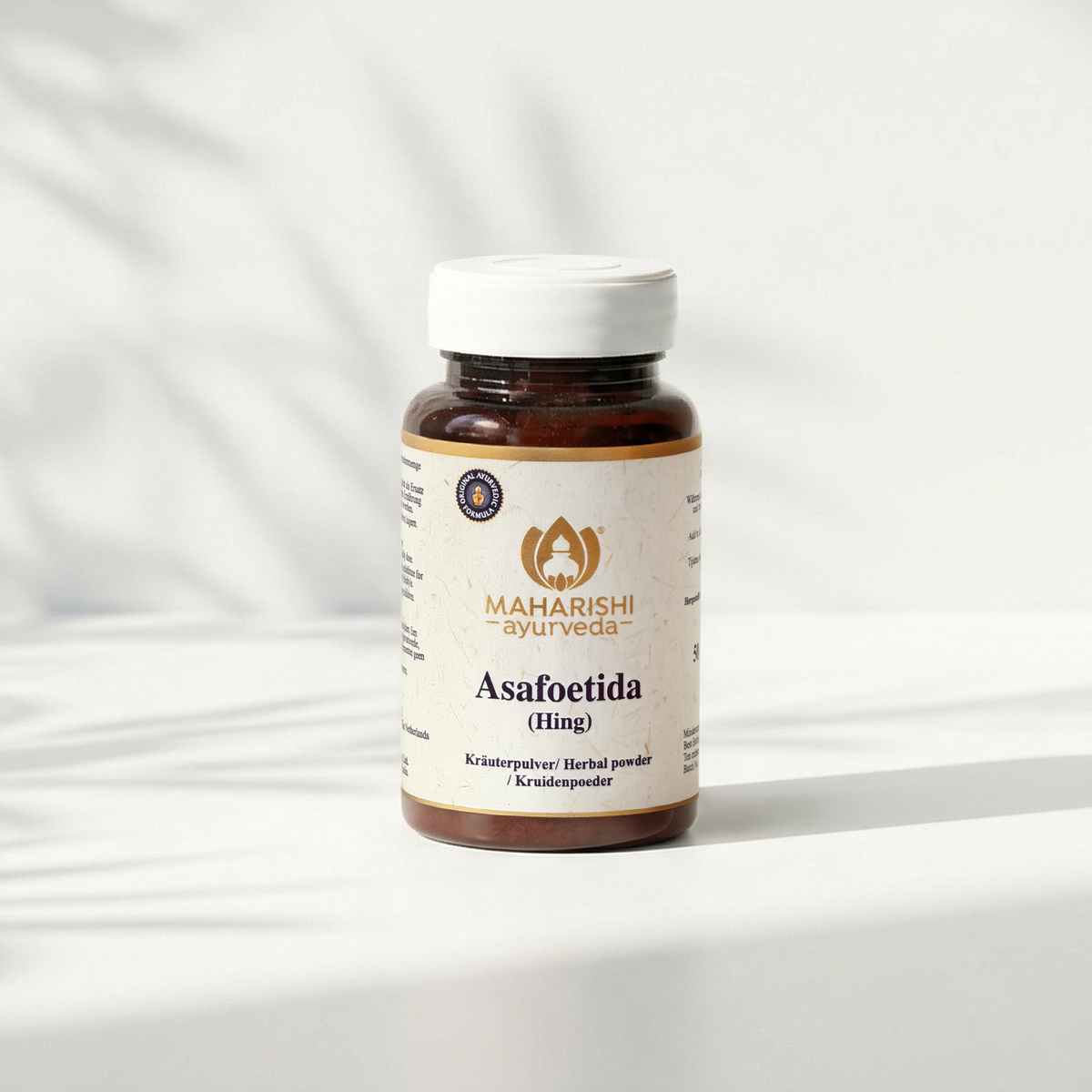
How Is Asafoetida Used in Ayurveda?
Traditional Ayurvedic texts describe Hing using terms such as Deepana and Vata Anulomana.
These concepts relate to classical Ayurvedic descriptions of digestion and Vata. They should be understood as traditional terminology, not as evidence that culinary asafoetida treats digestive conditions.
In everyday cooking, Hing is appreciated for its distinctive flavour.
Would you like to learn more about Asafoetida (Hing)?
Asafoetida, also known as hing, is a traditional spice in Ayurvedic cuisine. Its intense aroma lends a distinctive flavor to lentils, vegetables, and savory dishes in particular. But what is the significance of hing in Ayurveda, and how is it traditionally used?
Discover more in our article Asafoetida (Hing) in Ayurveda: Effects and Uses .
How Do You Add Asafoetida to Food?
The simplest method is to add a very small pinch of Hing to warm ghee or oil.
Follow these steps:
-
Warm a small amount of ghee or oil in a pan.
-
Add cumin seeds or another suitable spice if desired.
-
Reduce the heat and add a tiny pinch of asafoetida.
-
Stir briefly for a few seconds.
-
Add the prepared vegetables or incorporate the tempering into cooked lentils.
Asafoetida should not be heated for too long because it can develop a bitter flavour.
Which Dishes Work Well With Asafoetida?
Hing is particularly suitable for:
-
Moong dal
-
Red lentil soup
-
Spiced potatoes
-
Cooked vegetables
-
Rice dishes
-
Savoury lentil preparations
Pure asafoetida resin is highly concentrated, while commercial Hing powders are often mixed with flour or starch.
Check the product ingredients and allergen information, especially if you avoid gluten.
How Can You Use Rock Salt in Ayurvedic Cooking?
Rock salt, known as Saindhava Lavana in Ayurveda, is traditionally used for seasoning food. It can be added to vegetables, rice, soups, lentils and other everyday dishes.
Classical Ayurvedic literature, including the Charaka Samhita, describes Saindhava Lavana favourably among different types of salt.
This is a traditional Ayurvedic classification rather than evidence that rock salt is healthier than regular table salt.
Rock Salt
View Product Details
How Do You Use Rock Salt in Everyday Meals?
Rock salt can be used to season:
-
Freshly cooked rice
-
Vegetable soups
-
Lentil dishes
-
Cooked seasonal vegetables
-
Khichdi
-
Savoury grain preparations
Use it in moderate quantities according to the recipe and individual dietary requirements.
What Is the Difference Between Rock Salt and Table Salt?
Both rock salt and table salt are mainly composed of sodium chloride.
The main practical differences relate to processing, crystal size and whether iodine has been added.
|
Feature |
Rock salt |
Regular table salt |
|
Main component |
Sodium chloride |
Sodium chloride |
|
Appearance |
May have larger crystals and varying colours |
Usually fine, uniform crystals |
|
Culinary use |
Seasoning and cooking |
Seasoning and cooking |
|
Iodine content |
Usually not iodised unless stated |
Often iodised, depending on the product |
|
Sodium consideration |
Use moderately |
Use moderately |
Rock salt is not automatically a healthier alternative to table salt.
Non-iodised rock salt generally provides little iodine, so it should not be relied upon as a replacement for dietary iodine sources.
Which Ayurvedic Kitchen Essential Should You Choose for Your Cooking?
The right kitchen essential depends on what you want to prepare.
You do not need to buy every spice or replace your existing ingredients. Start with products that fit naturally into the meals you already cook.
|
If you want to... |
You can explore... |
|
Add a warm, aromatic spice blend |
Vata Churna |
|
Use a mild, fragrant seasoning |
Pitta Churna |
|
Add a stronger, warming spice flavour |
Kapha Churna |
|
Cook with traditional clarified butter |
Organic Ghee |
|
Introduce a savoury onion-garlic-like note |
Asafoetida |
|
Season vegetables, grains and soups |
Rock Salt |
|
Build a basic Ayurvedic pantry |
A combination of suitable kitchen essentials |
For beginners, organic ghee, rock salt and one suitable culinary Churna can be a convenient starting point.
As you become more familiar with the flavours, you can explore additional spice blends and asafoetida.
How Can You Use These Ayurvedic Kitchen Essentials in Everyday Meals?
You can use these ingredients in familiar recipes without changing your entire cooking routine.
Here are five simple ways to introduce Ayurvedic kitchen essentials into everyday meals.
1. Ghee-Tempered Dal With Asafoetida
Cook yellow moong dal or another preferred lentil until soft.
Warm a little ghee in a separate pan, add cumin seeds and briefly sauté a tiny pinch of asafoetida.
Pour the tempering into the cooked dal and mix gently.
This preparation combines three traditional kitchen ingredients: ghee, cumin and Hing.
2. Cooked Vegetables With Vata Churna
Choose seasonal vegetables such as carrots, courgette or pumpkin.
Cook them with a little ghee until tender.
Add Vata Churna according to the product instructions and personal taste.
The spice blend introduces a warm, aromatic flavour without requiring multiple separate seasonings.
3. Basmati Rice With Ghee and Rock Salt
Cook basmati rice until tender.
Add a little organic ghee and a small quantity of rock salt.
Mix gently and serve warm.
You can also add cumin or fresh herbs for additional flavour.
4. Lentil Soup With Kapha Churna
Prepare a simple lentil soup using lentils, vegetables and water.
Once cooked, season with a modest quantity of Kapha Churna.
The ginger, black pepper and cinnamon in the blend introduce a more pronounced, warming spice profile.
Adjust the amount according to taste.
5. Khichdi With Pitta Churna and Ghee
Prepare khichdi using rice, lentils and water.
Add a little organic ghee and season with Pitta Churna according to your preference.
The coriander, fennel, cardamom and other spices in the blend add a fragrant character to the dish.
These examples demonstrate how Ayurvedic kitchen essentials can become part of familiar meals without complicated cooking techniques.
What Should You Look for When Choosing Ayurvedic Kitchen Essentials?
When choosing Ayurvedic cooking ingredients, prioritise quality, ingredient transparency and suitability for everyday culinary use.
1. Check the Ingredient List
Choose products with clearly listed ingredients.
This is particularly important for spice blends because formulations can contain additional ingredients such as sugar, salt or other seasonings.
2. Consider Quality and Sourcing
Look for reliable manufacturers that provide transparent information about ingredient sourcing and production.
Product quality is important for both flavour and consistent cooking results.
3. Look for Organic Certification Where Applicable
If you prefer organic ingredients, check whether the product carries recognised organic certification.
Do not assume that every traditional Ayurvedic product is automatically organic.
4. Read the Usage Instructions
Different Churnas and spices have different strengths.
Follow the recommended instructions and begin with small quantities when using unfamiliar ingredients.
5. Store Ingredients Correctly
Keep spice blends and asafoetida in airtight containers away from moisture, heat and direct sunlight.
Store ghee according to its label instructions and avoid introducing water or contaminated utensils into the container.
6. Choose Ingredients That Suit Your Cooking Style
An Ayurvedic kitchen should remain practical.
Choose ingredients that complement the vegetables, grains, lentils and dishes you already enjoy preparing.
You can expand your pantry gradually as you become more comfortable with different flavours and cooking methods.
Conclusion: Build an Ayurvedic Kitchen With Simple Everyday Ingredients
Creating an Ayurvedic kitchen does not require complicated recipes or a large collection of unfamiliar ingredients.
Vata Churna, Pitta Churna, Kapha Churna, Organic Ghee, Asafoetida and Rock Salt provide a practical introduction to traditional Ayurvedic-inspired cooking.
Each ingredient serves a different culinary purpose, from aromatic seasoning and gentle sautéing to adding savoury flavour and finishing freshly cooked meals.
Whether you are preparing rice, dal, vegetable soup, khichdi or seasonal vegetables, these kitchen essentials can help you experiment with different spice combinations and traditional cooking methods.
Start with the ingredients that suit your preferred meals, introduce new flavours gradually and keep your kitchen routine simple.
An Ayurvedic-inspired kitchen begins with thoughtful ingredients, freshly prepared food and the pleasure of everyday cooking.


