
![Maharishi Ayurveda Europe B.V. [DE]](http://maharishiayurveda.de/cdn/shop/files/mape_logo_85x_2x_4fa3ad6c-821a-4738-8803-0b9e4fbd888e.webp?v=1776845850&width=150)

![Maharishi Ayurveda Europe B.V. [DE]](http://maharishiayurveda.de/cdn/shop/files/mape_logo_85x_2x_4fa3ad6c-821a-4738-8803-0b9e4fbd888e.webp?v=1776845850&width=600)

Sesame Oil in Ayurveda: Traditional Everyday Uses
 2026 September 23
Sesame oil, known in Ayurveda as Tila Taila, has a long place in Ayurvedic food, body-care and self-care traditions. It is one of the most widely referenced oils in classical Ayurvedic practice and is traditionally valued for its warm, unctuous qualities.
The Charaka Samhita discusses sesame oil among important Sneha, or unctuous substances, while Vagbhata includes Abhyanga, or oil application, as part of Dinacharya, the daily routine.
In daily life, sesame oil may be explored in different ways, including self-massage, body care, hair care and cooking, depending on the product type and individual suitability. This guide explains what sesame oil is, why it is traditionally valued in Ayurveda, how it may be used and what to check before choosing a sesame oil product.
What Is Sesame Oil and Why Is It Important in Ayurveda?
What is sesame oil?
sesame oill is an oil pressed from sesame seeds, which come from the plant Sesamum indicum. It has been used for a long time in cooking, body care and traditional oil preparations.
In Ayurveda, sesame oil is not viewed simply as a neutral carrier oil. It is understood through its own qualities, preparation, intended use and suitability for the person.
Sesame Oil
View Product Information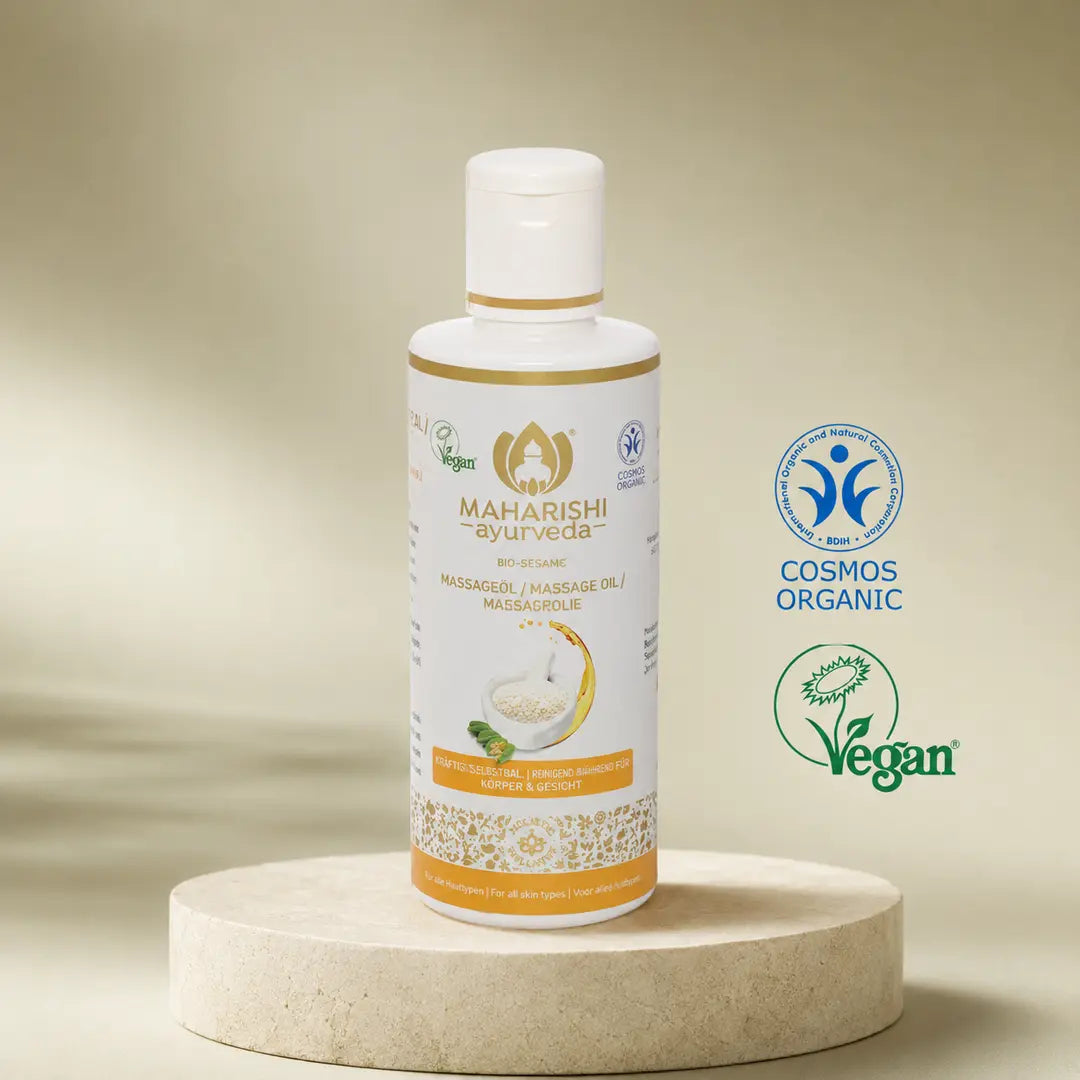
Sesame oil in traditional Ayurvedic practices
Sesame oil is traditionally used in several Ayurvedic practices, especially where warmth and oiliness are considered appropriate. It may be used on its own or as a base oil in traditional herbal oil preparations.
Common traditional uses include:
-
Abhyanga, or oil massage
-
body-care routines
-
scalp and hair oiling
-
foot oiling
-
use as a base for herbal oils
-
cooking, when the oil is labelled as edible
The intended use of the oil matters. A sesame oil used for massage may not always be suitable for cooking, and a medicated Ayurvedic oil should only be used according to its label and purpose.
Why sesame has a long history in Ayurveda
Sesame has a long history in Ayurveda because of its traditional qualities and versatility. Sesame oil is commonly described as Snigdha, meaning unctuous or oily, and Ushna, meaning warming.
These qualities help explain why sesame oil is often used in oil massage and traditional body-care routines. It has also been used as a base for many Ayurvedic oil preparations, known as Taila.
How sesame oil differs from other commonly used oils
Different oils have different traditional qualities. Ayurveda does not treat every oil in the same way.
Sesame oil is often associated with warmth and oiliness. Coconut oil, by contrast, is often considered more cooling in traditional Ayurvedic use. Ghee has its own role as a food and unctuous substance, while castor oil and medicated oils are used in very specific contexts.
This is why it is important to choose an oil based on its intended purpose, product label and personal suitability.
How Is Sesame Oil Traditionally Used in Ayurveda?
Traditional everyday applications
Sesame oil can be used in several everyday Ayurvedic routines. These uses are generally connected with warmth, oil application and body care.
Traditional everyday applications may include:
-
full-body self-massage
-
foot oiling
-
scalp oiling
-
simple skin application
-
use in warm meals, when edible
-
use as a base in herbal oils
The same oil should not automatically be used for every purpose. Always check whether the product is intended for food, cosmetic, massage or external Ayurvedic use.
Sesame oil in personal care
In personal care, sesame oil may be used as part of a body-care or massage routine. It is often applied before bathing and then washed off.
Some people may also use it for the scalp, feet or dry areas of the body. However, suitability can vary according to skin type, season, climate and personal comfort.
If irritation, redness, itching or discomfort occurs, discontinue use.
Sesame oil in traditional Ayurvedic routines
Sesame oil is closely connected with Abhyanga, the traditional practice of applying oil to the body. Vagbhata particularly highlights oil application to the head, ears and feet as part of daily care.
In a modern routine, sesame oil can be included in a simple and practical way. It does not need to be complicated or time-consuming.
Different ways sesame oil can be incorporated into daily life
Sesame oil may be incorporated into daily life through:
-
a short self-massage before bathing
-
foot oiling before a shower
-
scalp oiling before hair wash
-
body application after checking skin suitability
-
warm cooking, when the product is edible
-
use of herbal oils based on sesame oil, when suitable
The key is to match the oil with the right purpose.
How Is Sesame Oil Used for Ayurvedic Massage and Abhyanga?
What is Abhyanga?
Abhyanga is a traditional Ayurvedic practice of applying oil to the body and gently massaging it into the skin. It is commonly included in discussions of Dinacharya, or daily routine.
Abhyanga is not meant to be forceful. It is usually performed with steady, comfortable movements and should be adapted to the person’s body, time and comfort.
Why sesame oil is traditionally used for Abhyanga
Sesame oil is traditionally used for Abhyanga because of its Snigdha and Ushna qualities. In simple terms, it is considered oily and warming.
These qualities explain why sesame oil is often chosen when warmth and unctuousness are desired in a body-care routine.
However, this does not mean sesame oil is suitable for everyone in every season. Individual constitution, current balance, climate and product type should be considered.
Practical tips for using oil during a massage
When using sesame oil for massage:
-
use a towel you do not mind staining
-
avoid slippery bathroom floors
-
apply only as much oil as needed
-
do a patch test if your skin is sensitive
-
avoid eyes and broken skin
-
discontinue use if irritation occurs
-
check the label before use
If you have a skin condition, are pregnant or have a medical concern, seek professional advice before using oils regularly.
How Can You Use Sesame Oil in Your Body-Care Routine?
Using sesame oil as part of body care
Sesame oil may be used as part of a traditional body-care routine, especially before bathing. It can be applied to the arms, legs, feet or body in small amounts.
For many people, occasional use may be easier to maintain than a full daily massage routine.
Simple ways to incorporate it into your routine
Simple ways to include sesame oil in body care include:
-
applying oil to the feet before bathing
-
using it for a short self-massage
-
applying it to dry-feeling areas, if suitable
-
using it before a warm shower
-
including it once or twice a week instead of daily
Ayurveda is often easier to practise when the routine fits your real life.
How to apply and handle the oil
Sesame oil can feel rich and heavy, so begin with a small amount. Warm oil usually spreads more easily than cold oil.
After application, wash your hands and be careful on tiled or wet surfaces. Oil can make floors slippery.
Store sesame oil according to the label instructions and keep the bottle closed when not in use.
Choosing an oil suitable for cosmetic use
For body care, choose sesame oil clearly labelled for cosmetic, massage or external use. Avoid using cooking oil on the skin unless the product is also suitable for that purpose.
Check the label for:
-
intended use
-
ingredients
-
processing method
-
storage guidance
-
expiry date
-
whether it is plain or medicated
-
any warnings or precautions
How Is Sesame Oil Traditionally Used for Hair Care?
Sesame oil has also been used in traditional hair-care routines. It may be applied to the scalp and hair before washing, depending on suitability.
In Ayurveda, oiling the head is one of the traditional forms of oil application described in daily care practices.
A simple hair-oiling routine may include:
-
applying a small amount of sesame oil to the scalp
-
gently massaging with the fingertips
-
spreading a little oil through the hair lengths if desired
-
leaving it for a short period
-
washing thoroughly afterwards
Start with a small amount, as sesame oil can feel heavy for some hair types.
Traditional oiling practices
Traditional oiling practices may include scalp oiling, head massage or pre-wash oil application. These practices should be adapted to the person’s hair type, scalp condition and comfort.
Avoid applying oil to the scalp if there is irritation, infection, injury or discomfort.
Can You Use Sesame Oil in Ayurvedic Cooking?
Sesame oil can be used in cooking when the product is clearly labelled as edible. In traditional food routines, oils are chosen according to the recipe, season, constitution and purpose.
Sesame oil may be used in warm dishes and everyday meals when suitable.
Using sesame oil with everyday meals
Edible sesame oil may be used in:
-
cooked vegetables
-
warm grain dishes
-
dal
-
simple stir-fried preparations
-
traditional recipes
-
seasonal meals
Use it according to the product label and culinary purpose.
Sesame oil and warm dishes
Sesame oil is often associated with warm preparations. It may fit well into cooked meals where its taste and qualities suit the dish.
The amount used should remain appropriate to the person’s diet, digestion and overall food routine.
What to consider when choosing sesame oil for cooking
For cooking, always choose sesame oil labelled as food-grade or edible. Do not use cosmetic or medicated Ayurvedic oils in food unless the label clearly states they are suitable for ingestion.
Check:
-
whether the oil is edible
-
whether it is refined or unrefined
-
ingredients
-
storage instructions
-
expiry date
-
smoke point guidance if provided
-
whether it is plain sesame oil or a herbal preparation
The product label is the most important guide.
What Is the Difference Between Ayurvedic Sesame Oil and Regular Sesame Oil?
Differences in intended use
The phrase “Ayurvedic sesame oil” can mean different things. Sometimes it refers to plain sesame oil used in Ayurvedic routines. In other cases, it may refer to a medicated Taila, where sesame oil has been traditionally processed with herbs.
Regular sesame oil may be intended mainly for cooking, while Ayurvedic sesame oil may be intended for massage, body care or external use.
Ingredients and formulation
Plain sesame oil usually contains only sesame oil. Medicated Ayurvedic oils may contain herbal extracts, decoctions or other ingredients processed into the oil.
This difference matters because a medicated oil is not interchangeable with plain sesame oil.
Traditional Ayurvedic preparations
In Ayurveda, many herbal oils are prepared with a base oil, herbs and other liquid substances according to traditional methods. Sesame oil is often used as a base because of its qualities.
These oils should be used according to their intended purpose.
What to check on the product label
Before choosing sesame oil, check:
-
Is it for food, massage, cosmetic or external use?
-
Is it plain sesame oil or a medicated oil?
-
What ingredients are listed?
-
Are there any warnings?
-
How should it be stored?
-
Is it suitable for your intended routine?
When in doubt, follow the label and seek professional guidance.
Conclusion
Sesame oil, or Tila Taila, has a long and respected place in Ayurveda. It is traditionally valued for its warm and unctuous qualities and is used in self-massage, body care, hair care, oil preparations and cooking when the product is edible.
The most important point is to choose the right sesame oil for the right purpose. A cooking oil, cosmetic oil and medicated Ayurvedic oil may look similar but can have very different intended uses.
If you want to explore sesame oil in an Ayurvedic routine, start simply. Use a suitable oil, follow the product label and adapt the practice to your body, season, climate and comfort.
Sesame Oil
View Product Information


