
![Maharishi Ayurveda Europe B.V. [DE]](http://maharishiayurveda.de/cdn/shop/files/mape_logo_85x_2x_4fa3ad6c-821a-4738-8803-0b9e4fbd888e.webp?v=1776845850&width=150)

![Maharishi Ayurveda Europe B.V. [DE]](http://maharishiayurveda.de/cdn/shop/files/mape_logo_85x_2x_4fa3ad6c-821a-4738-8803-0b9e4fbd888e.webp?v=1776845850&width=600)

Shilajit Resin Explained: How Resin Differs from Powder and Tablets
 2026 September 01
Shilajit has become popular today, especially in resin form. But before choosing between resin, powder or tablets, it is important to understand why Ayurveda valued Shilajatu in the first place.
Shilajit is a naturally occurring substance that exudes from mountain rocks. Classical Ayurvedic texts describe its origin, qualities, processing and use in considerable detail. Ayurveda also places importance on using properly purified Shilajit rather than consuming the raw material.
In this guide, you will learn what Shilajit resin is, how it differs from powder and tablets, why quality matters and how to think about Shilajit as part of a modern Ayurvedic routine.
What Is Shilajit Resin and Why Is It Traditionally Used in Ayurveda?
Shilajit resin is the thick, sticky form of purified Shilajit available today. Its texture is semi-solid and resin-like, which is one reason many people associate it with the natural appearance of Shilajit.
In Ayurveda, Shilajit is traditionally known as Shilajatu. Classical texts describe Shilajatu as a substance connected with mountain rocks and place strong emphasis on its proper processing before use.
However, “Shilajit resin” is a modern product format. Classical Ayurvedic texts discuss Shilajatu itself rather than modern commercial categories such as resin, powder or tablets.
Shilajit Resin
View Product Information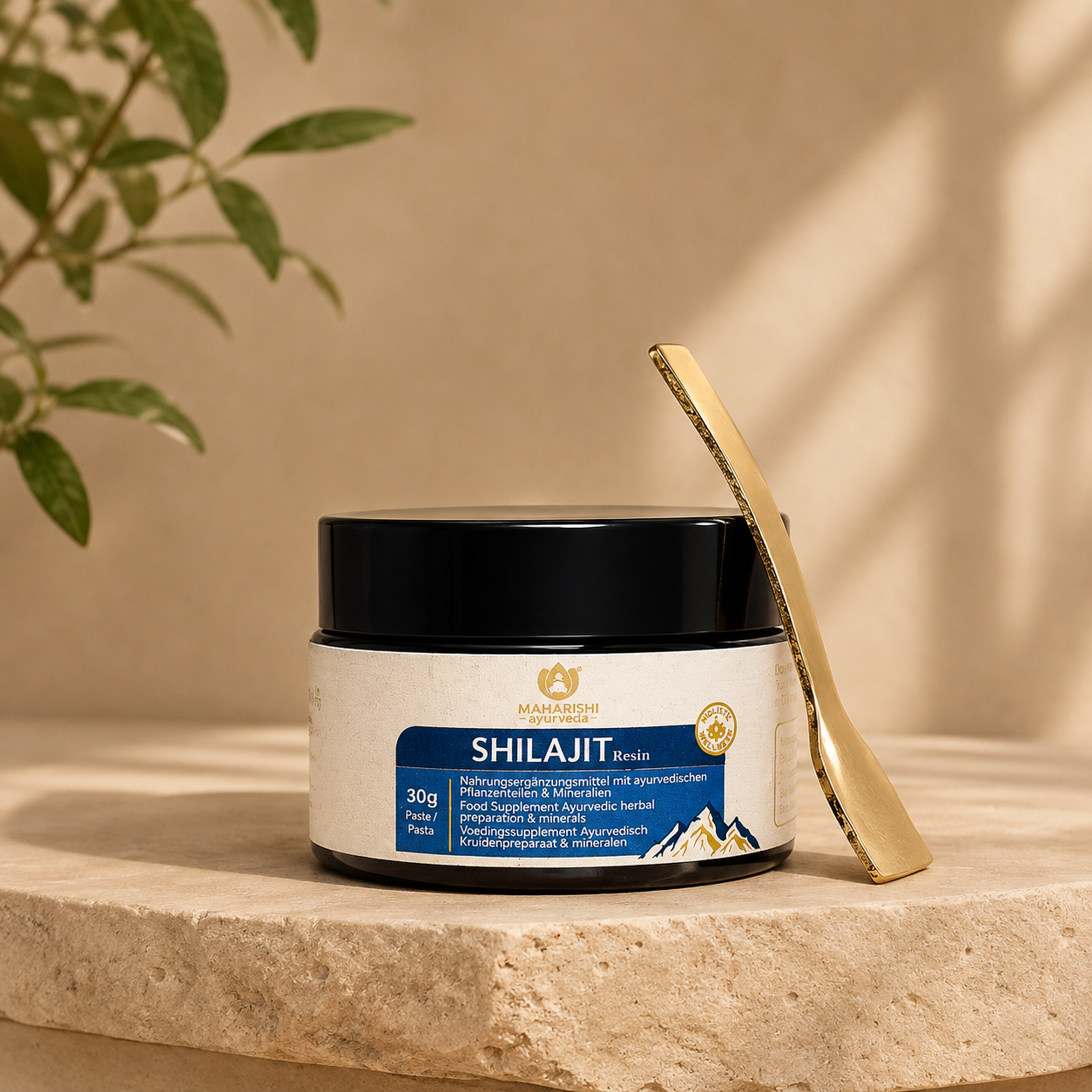
Where does Shilajit come from?
Shilajit is described as a natural substance that exudes from rocks in mountainous regions. Its composition may vary depending on the source, geography and processing method.
Because Shilajit naturally contains minerals, it should not be used in raw or untested form. Proper purification, quality testing and responsible sourcing are important considerations.
Why has Shilajit had a long tradition in Ayurveda?
Shilajit has a long tradition in Ayurveda because classical texts describe its qualities, preparation and role within wider Ayurvedic practice.
The Charaka Samhita, Chikitsa Sthana 1/3, describes Shilajatu in the context of Rasayana and also refers to it as Vrishya. These are classical Ayurvedic descriptions and should be understood within their traditional context.
They should not be read as claims that Shilajit treats or cures a modern medical condition.
What Are the Traditional Benefits of Shilajit Resin in Ayurveda?
From an Ayurvedic perspective, the traditional value of Shilajit comes from Shilajatu itself, not from resin as a separate category.
Resin does not have completely different Ayurvedic benefits from powder or tablets. It is one modern way of taking purified Shilajit.
Shilajit as a Rasayana
As a Rasayana, Shilajit was traditionally valued as part of practices intended to maintain nourishment, vitality and healthy functioning over time.
Rasayana in Ayurveda is not only about one herb or one product. It is a broader traditional approach that includes suitable herbs, food, daily routine, sleep, digestion and lifestyle habits.
Shilajit and Urja in Ayurveda
Classical Ayurvedic descriptions also connect properly used Shilajatu with Urja, which can broadly be understood as vitality or strength in a traditional context.
This does not mean Shilajit should be described simply as an “energy supplement.” Ayurveda looks at vitality through a wider lens that includes digestion, nourishment, routine and individual suitability.
Shilajit and Vrishya in Ayurveda
Shilajatu is also described as Vrishya, a classical Ayurvedic term associated with reproductive vitality.
This should be presented carefully. It is a traditional Ayurvedic classification, not a modern medical claim. Shilajit should not be promoted as a treatment for fertility, sexual dysfunction or any reproductive health condition.
Shilajit, Agni and Ayurvedic metabolism
From the Ayurvedic perspective of Agni and metabolism, Shilajatu is traditionally considered in contexts involving Kapha, Ama or Meda.
This Ayurvedic interpretation links it with digestion, transformation and the body’s ability to process nourishment. However, these are traditional Ayurvedic concepts and should not be treated as medical diagnoses or clinical claims.
What Makes Shilajit Resin Different from Powder and Tablets?
The main difference between Shilajit resin, powder and tablets is the form, not a completely different set of traditional benefits.
Resin is semi-solid and sticky. Powder is dry and easier to mix. Tablets provide a fixed and convenient amount.
It is not accurate to automatically say that resin is stronger, purer or more effective. Processing, concentration, sourcing and testing can differ between manufacturers.
Shilajit
View Product Information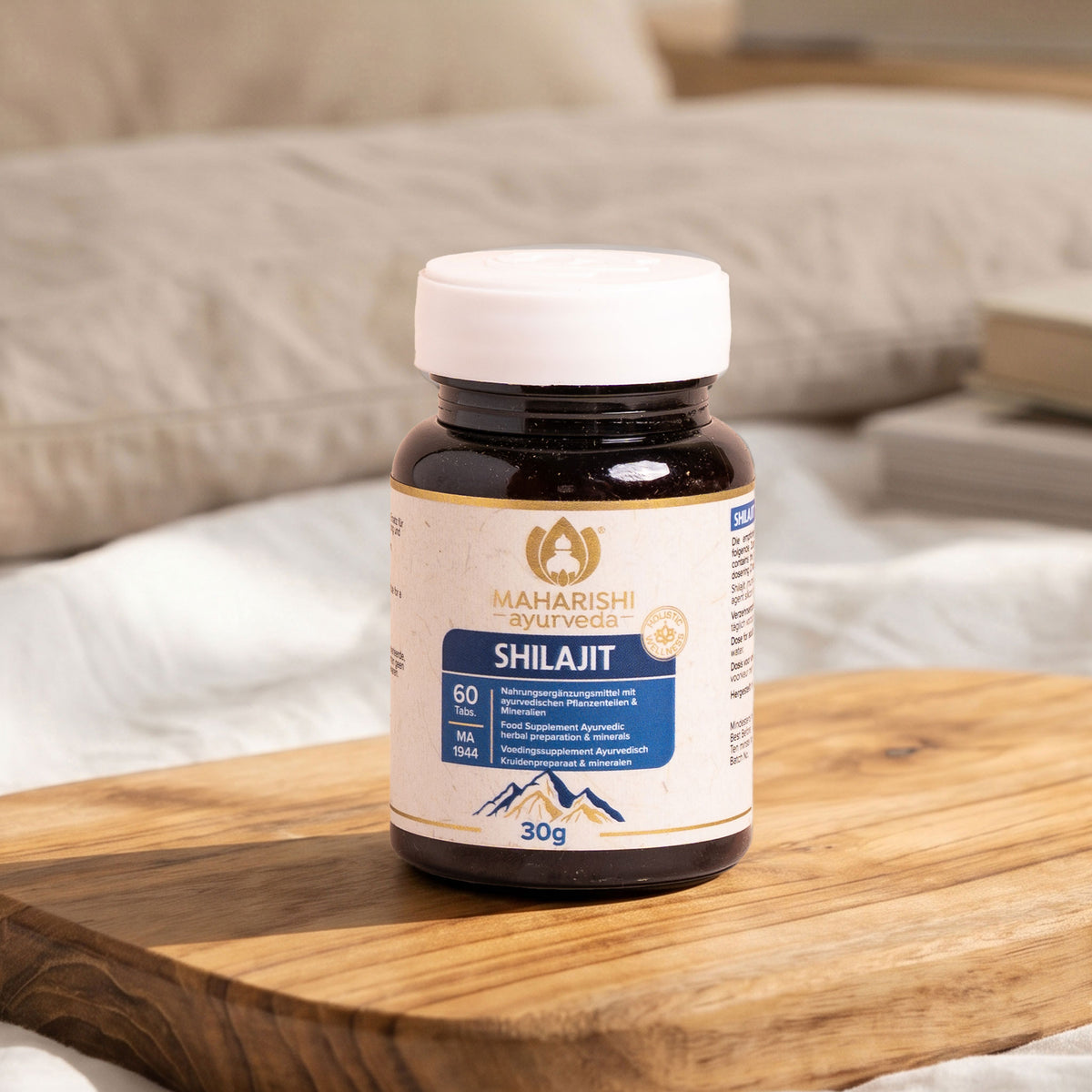
Shilajit Resin vs Powder vs Tablets
|
Format |
What It Is |
Practical Benefit |
What to Consider |
|
Shilajit resin |
Thick, semi-solid purified Shilajit |
Feels close to the natural resin-like consistency |
Needs careful measuring and handling |
|
Shilajit powder |
Dry powdered form |
Easy to mix into drinks or formulations |
Quality and concentration can vary |
|
Shilajit tablets |
Fixed-dose tablet format |
Convenient for travel and daily routine |
Less flexible than resin or powder |
The right format depends on your lifestyle, product quality and the instructions provided by the manufacturer.
Why Do Many People Choose Shilajit Resin?
Many people choose Shilajit resin because it feels closer to the natural consistency associated with Shilajit. It can also be dissolved into a warm drink and made part of a morning routine.
Some users prefer resin because it feels more traditional or less processed than tablets. However, this does not automatically make it better.
From an Ayurvedic point of view, quality, proper purification and individual suitability matter more than whether you choose resin, powder or tablets.
Is resin the most authentic form of Shilajit?
Resin may feel closer to Shilajit’s naturally occurring texture, but “authenticity” should not be judged by texture alone.
A high-quality Shilajit product should be:
-
Properly purified
-
Tested for contaminants
-
Clearly labelled
-
Responsibly sourced
-
Used according to instructions
-
Suitable for the individual
A poorly tested resin is not better than a well-tested tablet or powder.
How Do You Use Shilajit Resin in Your Daily Routine?
For a modern Shilajit resin product, follow the manufacturer’s recommended quantity rather than estimating the amount yourself.
Shilajit resin is commonly dissolved in a warm liquid. Because resin is sticky and concentrated, it should be measured carefully according to the product instructions.
Traditional ways of using Shilajit
Traditionally, Shilajatu was not always taken in exactly the same way. Classical Ayurvedic texts describe different accompanying liquids and preparations selected according to purpose and individual requirement.
This is one reason personalised guidance can be useful. The most suitable approach may depend on constitution, digestion, season, age, current needs and other factors.
How can Shilajit resin fit into a routine?
Shilajit resin may be paired with a simple habit, such as:
-
A morning warm-water routine
-
A supplement routine recommended by a practitioner
-
A calm start to the day
-
A consistent time that follows product directions
The routine should be simple and realistic. Ayurveda does not mean adding many products at once.
How should Shilajit resin be stored and handled?
Always follow the storage instructions on the product label. In general, resin products should be kept clean, sealed and protected from contamination.
Because resin is sticky, use a clean spoon or tool if provided. Avoid dipping wet or unclean objects into the jar.
Is Shilajit Resin Right for Your Lifestyle?
Shilajit resin may suit you if you enjoy preparing your supplements and do not mind measuring each serving.
It may not suit you if you prefer a quick, fixed-dose format or need something easy to carry while travelling.
When might resin be suitable?
Resin may suit people who:
-
Prefer a semi-solid format
-
Like preparing Shilajit in a warm drink
-
Do not mind measuring each serving
-
Want a format that feels closer to traditional consistency
-
Have time for a simple preparation routine
When might powder be suitable?
Powder may suit people who:
-
Want something easy to mix
-
Prefer a dry format
-
Do not want the sticky handling of resin
-
Want more flexibility than tablets
However, powder quality can vary, so the source and testing still matter.
When might tablets be suitable?
Tablets may suit people who:
-
Want convenience
-
Travel often
-
Prefer a fixed quantity
-
Do not want to measure resin or powder
-
Want a simple routine
Tablets are practical, but they should still be chosen based on quality, ingredients and suitability.
What Should You Check Before Choosing Shilajit?
Quality is especially important with Shilajit.
Shilajit naturally contains minerals, and poorly processed or contaminated products may raise safety concerns. Choose products that are purified, tested and clearly labelled.
Before choosing Shilajit, check:
-
Whether the product is purified
-
Whether it is tested for heavy metals and contaminants
-
The recommended quantity
-
The full ingredient list
-
Whether it is resin, powder or tablets
-
Storage instructions
-
Cautions for pregnancy, breastfeeding, medication or health conditions
-
Whether the product is from a reputable supplier
Do not consume raw, unpurified or untested Shilajit.
Who Should Be Careful With Shilajit?
Shilajit is not suitable for everyone.
Pregnant or breastfeeding people, children, those taking medicines and people with existing health conditions should seek professional advice before use.
People with kidney disease, high iron levels, gout, serious health conditions or those taking regular medication should be especially careful and should not self-manage with Shilajit.
Conclusion
Shilajit resin is one modern form of purified Shilajit. It is thick, sticky and semi-solid, and many people choose it because it feels close to the natural resin-like consistency of Shilajit.
Powder and tablets offer different practical advantages. Powder is dry and flexible, while tablets are convenient and provide a fixed amount.
From an Ayurvedic perspective, the most important point is not simply the format. It is whether the Shilajit is properly purified, tested, clearly labelled and suitable for the individual.
Shilajit should be understood within its traditional Ayurvedic context as Shilajatu, including its role in Rasayana practice. It should not be used as a replacement for medical care, a balanced diet or a suitable daily routine.
Shilajit Resin
View Product Information


