
![Maharishi Ayurveda Europe B.V. [DE]](http://maharishiayurveda.de/cdn/shop/files/mape_logo_85x_2x_4fa3ad6c-821a-4738-8803-0b9e4fbd888e.webp?v=1776845850&width=150)

![Maharishi Ayurveda Europe B.V. [DE]](http://maharishiayurveda.de/cdn/shop/files/mape_logo_85x_2x_4fa3ad6c-821a-4738-8803-0b9e4fbd888e.webp?v=1776845850&width=600)

Brahmi in Ayurveda: History, Tradition and Everyday Use
 2026 July 29
Brahmi is one of the best-known herbs in the Ayurvedic tradition. It has been used in traditional herbal preparations for generations and remains part of modern Ayurvedic routines today.
Today, Brahmi is available in various forms, including powder, tablets, liquid preparations for oral use and herbal oil. Tablets may suit people who prefer a convenient format, while powder offers a more traditional form. Brahmi oil is mainly used externally as part of an Ayurvedic head, scalp or hair-care routine.
The choice of an Ayurvedic herb should not be based solely on its popularity. It is important to check the botanical name, understand whether the product is intended for internal or external use, and follow the manufacturer's instructions.
This guide explains what Brahmi is, its traditional role in Ayurveda, the forms available and how it can be incorporated into a simple Ayurvedic lifestyle, without presenting it as a treatment or quick fix.
What is Brahmi in Ayurveda?
Brahmi is the common Ayurvedic name often used for Bacopa monnieri . It is a traditional Ayurvedic herb that may be found as a single-herb preparation or as part of broader Ayurvedic formulations.
Using the botanical name is important because common plant names can vary depending on the region, tradition and commercial product. The botanical name Bacopa monnieri should be clearly stated on the product label when this plant is used.
Some commercial products also use the name Brahmi for Centella asiatica , which is more specifically known in Ayurveda as Mandukaparni and is also commonly called Gotu Kola. Bacopa monnieri and Centella asiatica are different plants. This does not mean that one is automatically better than the other. It does mean that consumers should check the Latin botanical name rather than relying only on the common name on the front of the packaging.
Brahmi Bio
View product information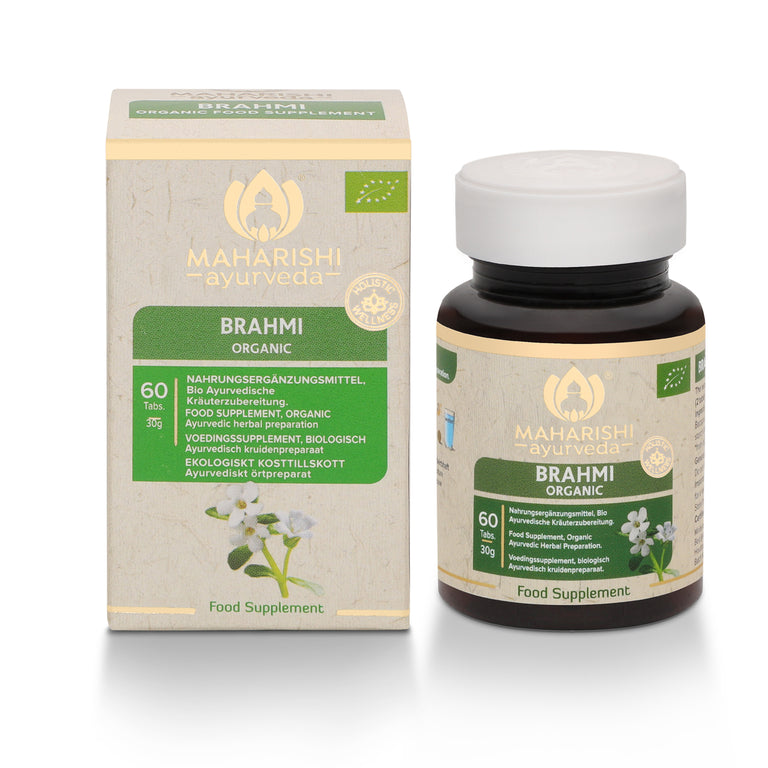
Why is Brahmi so well known in Ayurveda?
Brahmi has long held an established place in the Ayurvedic herbal tradition. It is traditionally associated with Medhya an Ayurvedic concept relating to the mind, understanding and intellect.
This traditional association helps explain why Brahmi often appears in Ayurvedic formulations intended for people with mentally demanding routines, für Studierende oder für people following broader mind-body lifestyle programmes.
However, this traditional description should not be understood as evidence that every Brahmi product improves memory, concentration or a medical condition. In Ayurveda, the role of an herb depends on more than just its name. The formulation, quantity, accompanying ingredients, method of preparation and suitability for the individual are also important.
What role does Brahmi play in an Ayurvedic lifestyle?
Brahmi is traditionally used both as a single herb and as part of compound Ayurvedic formulations. Its role is best understood within a complete lifestyle system that also considers diet, sleep, daily routine, seasonal habits, exercise and emotional wellbeing.
Ayurvedic herbs are traditionally not selected simply because a particular herb is popular. An Ayurvedic practitioner may consider factors such as:
- Constitution and current state of balance
- Age and stage of life
- Appetite and digestion
- Climate and season
- Existing health conditions
- Medicines and other food supplements being taken
- Product form, ingredients and quantity
This individualised approach differs from treating a single herb as a universal solution for everyone. For general everyday use, always follow the instructions and warnings on a legally marketed product.
Is Brahmi used alone or in herbal formulations?
Brahmi may be available as a single-herb product or as part of an Ayurvedic multi-herb formulation. It may be combined with herbs such as Ashwagandha, Shankhapushpi, Amalaki, liquorice or other traditional ingredients.
The intended purpose and recommended quantity of a combined product may differ from those of a single-ingredient Brahmi preparation. A compound product containing Brahmi should therefore not automatically be used in the same way as pure Brahmi powder or Brahmi tablets.
The full ingredients list should be checked carefully, particularly by people with allergies, dietary restrictions, diagnosed conditions or regular medication use.
What forms of Brahmi are available?
Brahmi is available in various forms, including powder, tablets, liquid preparations for oral use and herbal oil. The most suitable form depends on how the product is intended to be used, which ingredients it contains, personal preference and the manufacturer's instructions.
It is particularly important to distinguish between products intended to be swallowed and products intended only for external use. A liquid Brahmi food supplement is not the same as Brahmi oil, which is applied to the scalp, hair or skin.
Food supplements may be sold in measured forms such as tablets, capsules, powders or liquids. They are intended to supplement the normal diet and should not be presented as a substitute for a varied diet, a balanced lifestyle or necessary medical care.
What should you know about Brahmi powder?
Brahmi powder generally contains dried and ground plant material. The botanical name and the plant part used should be checked on the product label.
Brahmi powder may appeal to people who:
- prefer a traditional herbal form
- like to measure and mix herbs themselves
- want to take the herb with a suitable liquid
- prefer a product with relatively few additional ingredients
Brahmi powder has a distinctive herbal and slightly bitter taste that may not appeal to everyone. It must also be measured carefully. Use the measuring spoon or quantity specified on the packaging rather than estimating the amount with an ordinary kitchen spoon. Follow the manufacturer's instructions for timing, use and storage.
What should you know about Brahmi tablets?
Brahmi tablets bieten eine abgemessene and leicht mitzunehmende Form, die sich praktisch in eine tägliche Routine integrieren lässt.
Tablets may suit people who:
- prefer a convenient format
- travel regularly
- do not like the taste of herbal powders
- want a clearly stated amount per tablet
- find it easier to use a pre-measured product consistently
Not all Brahmi tablets are the same. Some contain whole-herb powder, while others contain a concentrated extract. Some may also contain additional Ayurvedic herbs, binding agents or coating agents.
The milligramme amount of a concentrated extract cannot always be directly compared with the same milligramme amount of whole-herb powder. Check the complete formulation and follow the recommended daily amount. Tablets should not automatically be crushed, split or combined with another Brahmi product unless the packaging or a suitably qualified professional explicitly recommends this.
Brahmi Bio
View product informationWhat should you check before using oral Brahmi preparations?
Oral Brahmi products may be available as drops, syrups, extracts or traditional liquid multi-herb formulations.
Before using a liquid product for oral consumption, check:
- the botanical name
- whether it contains only Brahmi or several herbs
- the amount per recommended serving
- whether it contains alcohol, sugar, honey or another carrier
- the recommended method of use
- storage instructions after opening
- how long it can be used after opening
Liquid preparations can differ considerably in concentration. Therefore, the number of drops or millilitres should always be based on the instructions for that specific product.
What is Brahmi oil used for in Ayurveda?
Brahmi oil is an Ayurvedic herbal oil intended mainly for external use. It may contain Brahmi processed or infused in a carrier oil such as sesame or coconut oil. Some formulations combine Brahmi with other herbs, fragrances or essential oils.
The term “Brahmi oil” does not describe a single standard recipe. The botanical ingredient, base oil and additional ingredients may vary by product.
Brahmi oil wird häufig in eine ayurvedische Kopf- and Kopfhautpflegeroutine integriert. Eine kleine Menge kann gemäß den Produktanweisungen sanft in die Kopfhaut einmassiert and im Haar verteilt werden. Das Öl kann vor dem Waschen der Haare aufgetragen oder in eine regelmäßige Shiro Abhyanga, also eine ayurvedische Kopfmassage-Routine, integriert werden.
This traditional use should not be presented as a treatment for hair loss, insomnia, anxiety, headaches, memory problems or any other medical condition.
What should you check before choosing Brahmi oil?
Before choosing a Brahmi oil, read the label carefully and look for:
- the botanical name of the Brahmi plant used
- the carrier oil, such as sesame or coconut oil
- additional herbs, fragrances or essential oils
- allergen information
- whether it is intended for the scalp, hair, face or body
- directions for use
- storage instructions
- the period of use after opening
A product labelled for cosmetic or external use must not be swallowed. It should only be used for the stated external purpose.
People with sensitive skin can initially apply a small amount to a limited area of skin and observe how the skin reacts. Avoid contact with the eyes and do not apply the oil to irritated, infected or damaged skin unless the product is specifically intended for this. Stop using it if redness, itching, burning or another unexpected reaction occurs.
Which form of Brahmi suits your lifestyle?
There is no single Brahmi form that is best for everyone. The right form depends on the purpose of the product, your preference and the information on the label.
Choose Brahmi powder if you prefer a traditional form and are comfortable measuring and mixing it yourself.
Choose Brahmi tablets if convenience, portability and a measured quantity are more important.
Choose a liquid preparation for oral use if you prefer drops or another liquid form and have checked the concentration, ingredients and recommended serving.
Choose Brahmi oil if you want to incorporate Brahmi into an external scalp, hair or head-massage routine.
Oral food supplements and externally applied oils serve different purposes and should not be considered interchangeable. Always check whether the product is intended to be swallowed or used externally.
People who are pregnant or breastfeeding, take medicines, have a diagnosed condition or are choosing an oral Brahmi product for a child should seek individual professional advice before use.
How can you incorporate Brahmi into your Ayurvedic routine?
Brahmi can be incorporated into an Ayurvedic routine by following the instructions for the selected product and linking it to an existing daily habit.
There is no universal time or method that applies to every Brahmi powder, tablet, liquid preparation or oil. The formulation, intended use and label instructions should determine how the product is used.
For an oral Brahmi product, choose a time that fits the instructions and is realistic for your daily life. The routine can be linked to:
- warm water in the morning
- breakfast
- the start of work or study
- an afternoon break
- a calm evening routine
A reminder or a visible but safe storage place can help make the routine easier to maintain. Food supplements should always be kept out of the reach of children, and the recommended daily amount should not be exceeded.
How does Brahmi oil fit into a head-care routine?
Brahmi oil can be incorporated into a weekly or regular head-massage routine according to the product instructions.
Apply a suitable amount to the scalp and gently massage it in with your fingertips. Do not scratch the scalp with your nails. Any remaining oil can be distributed through the hair if the product is intended for the scalp and hair.
Some people prefer to apply the oil before washing their hair, while others follow the timing recommended by the manufacturer or an Ayurvedic practitioner. Use a towel to protect clothing and furniture, and take care around showers or floors, as oil can make surfaces slippery.
How does Brahmi fit into a broader Ayurvedic lifestyle?
A Brahmi routine can be accompanied by Ayurvedic-inspired habits, for example:
- keeping reasonably regular waking and sleeping times
- eating freshly prepared meals whenever practical
- choosing seasonal foods
- making time for suitable exercise
- reducing unnecessary multitasking during meals
- taking regular breaks from screens
- including yoga, breathing exercises or meditation when appropriate
These habits provide a broader lifestyle context and prevent a single food supplement or external product from becoming the focus.
Ayurveda does not suggest that herbs can compensate for an otherwise unsuitable lifestyle. Brahmi should be incorporated as part of a balanced routine and not presented as a quick fix for stress, poor sleep, memory problems, anxiety or any other medical condition.
Discover more Ayurvedic classics
Brahmi is only one of many traditional topics in Ayurveda. Learn more about calcium in Ayurveda, Shilajit and Triphala, and discover how different Ayurvedic substances, herbs and routines are traditionally understood.
How do you choose a high-quality Brahmi product?
Quality cannot be judged solely by attractive packaging, a high milligramme amount or terms such as “premium”, “strong” or “traditional”. The information you should check depends on whether you are buying an oral food supplement or an external oil.
For an oral Brahmi product, look for a label that clearly states:
- the botanical name Bacopa monnieri
- the plant part used
- whether it contains powder or extract
- the amount per serving
- the full ingredients and allergen list
- directions for use
- relevant warnings
- storage instructions
- batch or lot number
- best-before date
- details of the responsible manufacturer or European operator
For Brahmi oil, check:
- the botanical name of Brahmi
- the carrier oil
- additional herbs or fragrances
- whether it is intended for the scalp, hair or broader body use
- instructions for external use
- warnings for sensitive skin
- best-before date or period of use after opening
- details of the responsible manufacturer or seller
Choose products from an established supplier that provides transparent product information and can answer consumer questions. Do not assume that a food supplement is more suitable simply because it is organic, concentrated, expensive or described using traditional terms.
Conclusion: How should you choose Brahmi for a simple Ayurvedic routine?
Brahmi, usually identified as Bacopa monnieri identifiziert, is a well-known herb within the Ayurvedic tradition. It may be available as powder, tablets, a liquid preparation for oral use, herbal oil or as part of a broader multi-herb formulation.
Brahmi tablets offer a convenient and measured option, while powder may appeal to people who prefer a more traditional form. Liquid preparations for oral use provide another option for internal use when they are clearly labelled for consumption. Brahmi oil is generally used externally as part of a scalp, hair or Ayurvedic head-massage routine.
Whichever form you choose, check the botanical name, the full ingredients list, the intended method of use and the product instructions.
Brahmi should be incorporated as part of a balanced Ayurvedic lifestyle rather than presented as a quick or guaranteed solution. Ayurveda encompasses much more than herbal products. Regular meals, adequate sleep, exercise, seasonal awareness and daily habits remain important parts of the broader approach.
Food supplements should not replace a varied diet, a balanced lifestyle or necessary medical care. Seek advice from a doctor, pharmacist or suitably qualified practitioner before using oral Brahmi during pregnancy or breastfeeding, for children, alongside medicines or in the presence of a diagnosed condition.


